Nano Banana 2 vs FLUX 2: The Ultimate AI Image Model Showdown (8 Tests)
By None None
Published: April 17, 2026
10 min read
Category: AI Tools & Models
Two of the most powerful AI image generation families are now going head-to-head. Google's Nano Banana lineup — built on Gemini multimodal architecture — has established itself as a benchmark for speed and text accuracy, while Black Forest Labs' FLUX 2 series has carved out a reputation for uncompromising output quality and deep multi-reference support. In this comparison, we pit four models — Nano Banana 2, Nano Banana Pro, FLUX 2 Pro, and FLUX 2 Max — against each other across eight real-world tests on AI Compare Hub: photorealistic fashion, product photography, cinematic scenes, anime illustration, text rendering, multi-image reference composition, and character reference consistency. Every text-to-image test uses the exact same prompt on all four models. Every image-to-image test uses the same reference inputs. The only variable is the model.
Image format: All comparison images in this article are generated at square 1:1 format. Results are shown as 2×2 grids — top-left: Nano Banana 2, top-right: Nano Banana Pro, bottom-left: FLUX 2 Pro, bottom-right: FLUX 2 Max.
Note on timing: All tests in this article were conducted in April 2026. Model performance may differ in the future as providers continue to update and improve their models.
Meet the Contenders: A Quick Model Primer
Here's the essential context for each model before the tests begin.
| Model | Made By | Architecture | Approx. cost per image (T2I) |
| Nano Banana 2 | Gemini 3.1 Flash Image | ~$0.07 (at 1K) | |
| Nano Banana Pro | Gemini 3 Pro Image | ~$0.13 (at 2K) · ~$0.26 (at 4K) | |
| FLUX 2 Pro | Black Forest Labs | FLUX.2 | ~$0.06 (at 2MP/~2K) · ~$0.25 (at 4MP/~3K max) |
| FLUX 2 Max | Black Forest Labs | FLUX.2 | ~$0.10 (at 2MP/~2K) · ~$0.19 (at 4MP/~3K max) |
For context: 2K resolution (1920×1080) is roughly 2 megapixels (MP); 4K (3840×2160) is roughly 8 MP. Nano Banana 2 and Pro support output up to 4K (8 MP). FLUX 2 models support a maximum of approximately 4 MP output — roughly 2000 pixels on the longer edge, which sits closer to 3K than 4K. Costs above are sourced from Vertex AI API documentation (Nano Banana) and Black Forest Labs API documentation (FLUX 2).
Important for I2I workflows: FLUX 2 models charge separately for each reference image input at approximately $0.03/MP per reference. In practice this means a single 2K reference adds ~$0.06 per generation, and costs compound with each additional reference. Nano Banana models include reference inputs at almost no extra charge — which makes them considerably more cost-efficient for multi-reference image-to-image workflows, particularly at higher output resolutions.
PART 1 — TEXT-TO-IMAGE TESTS
All tests in Part 1 use a text prompt only — no reference images are provided. This isolates each model's ability to interpret language and generate from scratch.
Test 1: Photorealistic Style — Beach Portrait Editorial
Photorealism is the most commercially important benchmark for AI image models — fashion editorials, lifestyle portraits, and travel photography drive the majority of professional use cases. This test uses a golden-hour beach portrait prompt with a specific subject, precise environmental detail, and a warm cinematic aesthetic direction. Generated at 9:16 vertical format — the native orientation for portrait and mobile content.
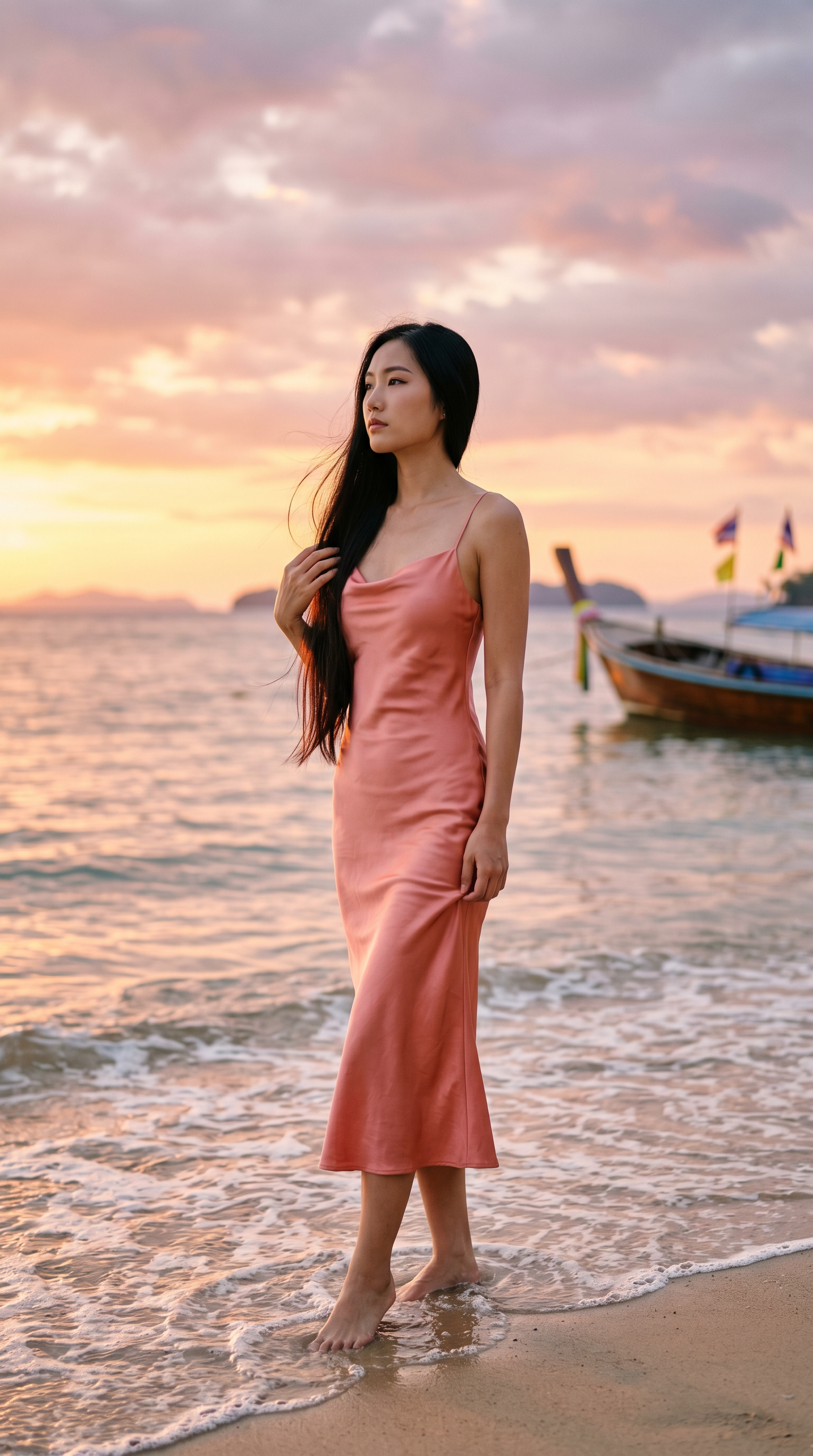
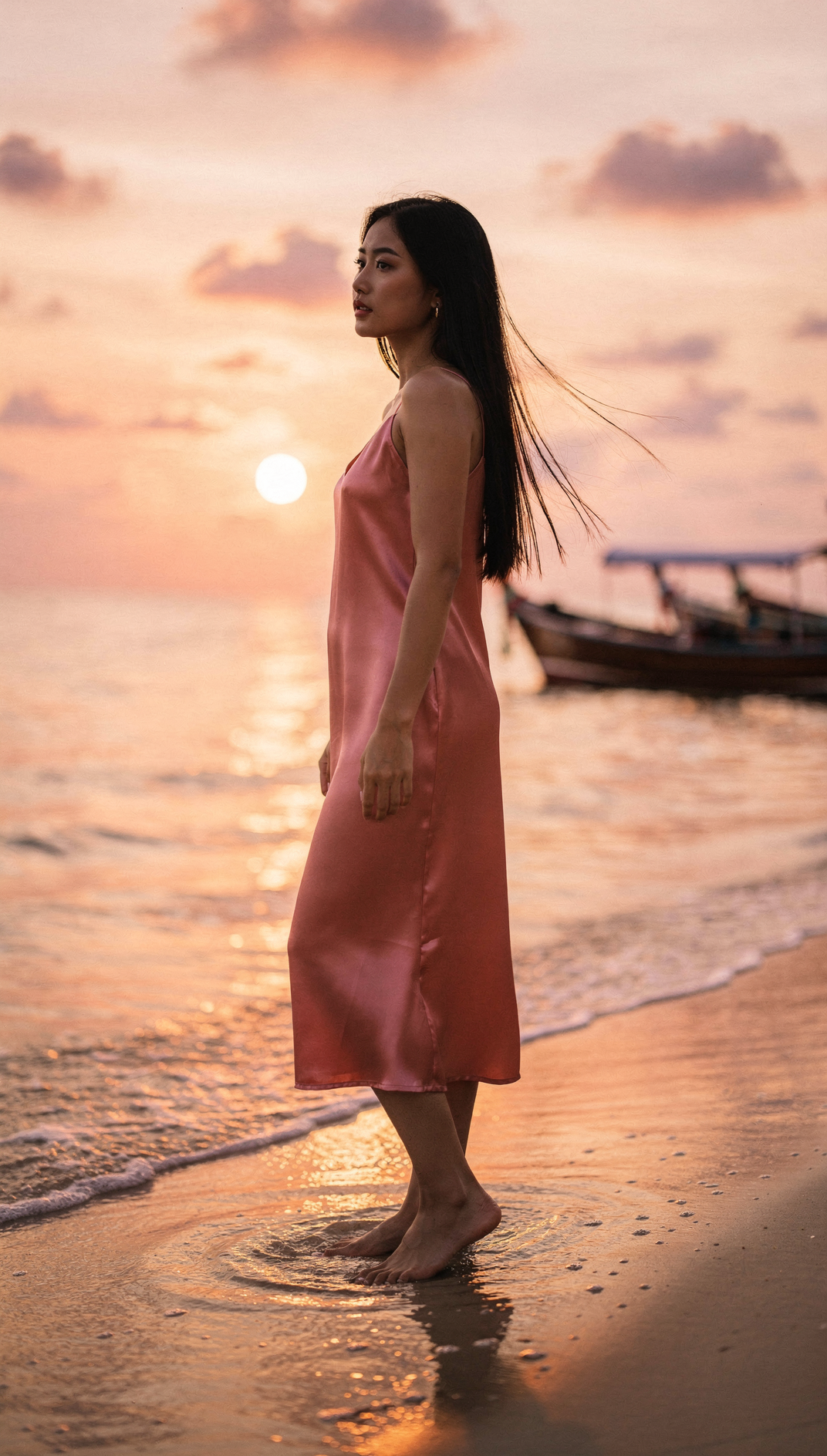
Test prompt: Full-body portrait of a young East Asian woman with long straight black hair, wearing a bias-cut salmon-pink satin slip dress with thin spaghetti straps and a fluid cowl neckline. She stands barefoot at the water's edge on a Thai beach during golden hour — the last 20 minutes before sunset — facing slightly away from the camera at a three-quarter angle, one hand resting gently at her side. Gentle ocean waves wash softly and shallowly around her bare feet, the water perfectly transparent and warm. Behind her: a wide, calm Andaman Sea bay lit in deep amber and coral, with a traditional Thai longtail wooden boat resting on the water in the soft mid-ground. The horizon glows with a warm orange-rose band below a deep blue-purple sky. The dress catches the warm directional golden-hour light — the satin fabric shows subtle sheen and fabric drape. Photorealistic, editorial lifestyle quality, warm film-style colour grading, 9:16 vertical format.
Nano Banana 2 | 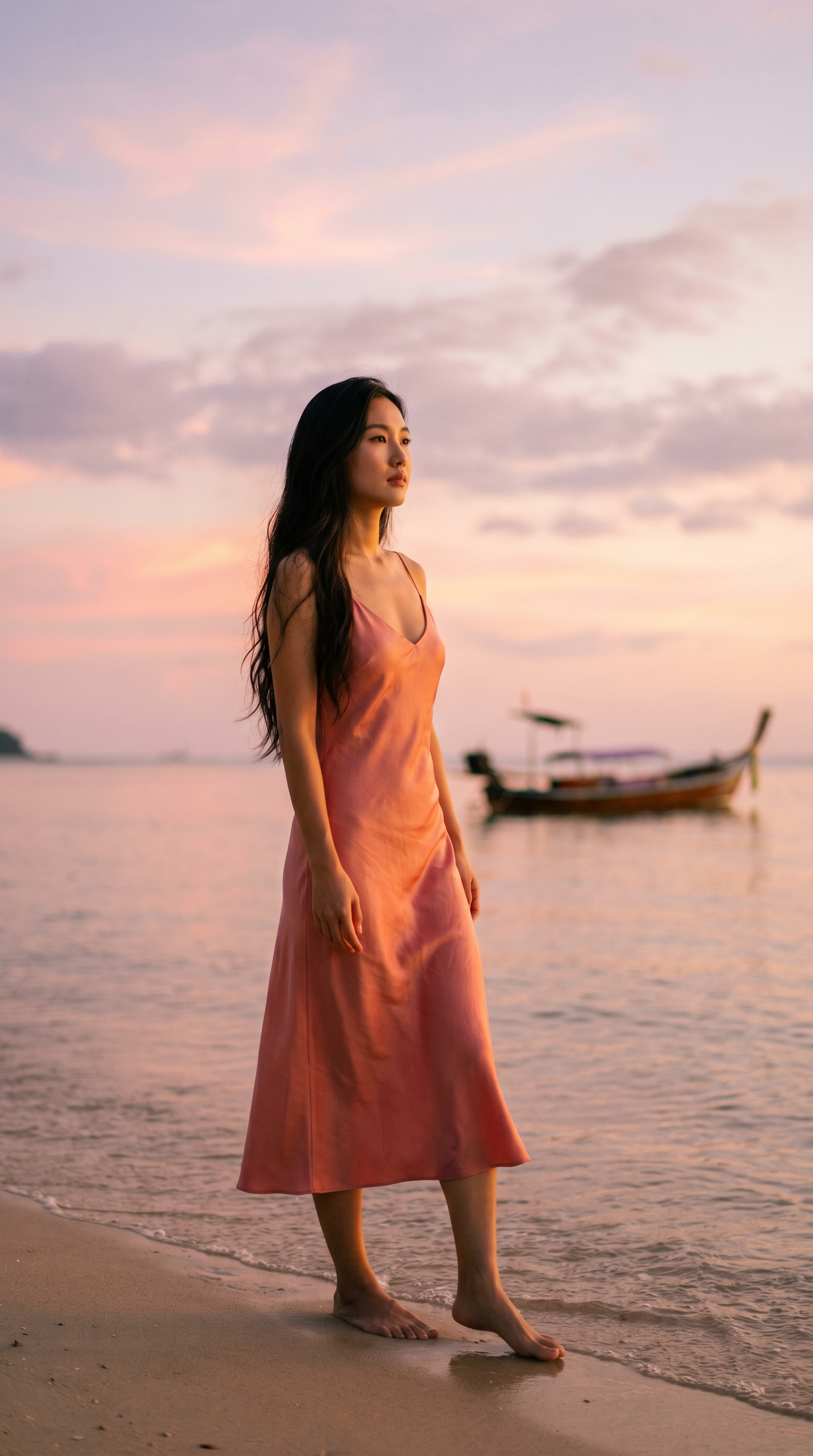
Nano Banana Pro |
FLUX 2 Pro | 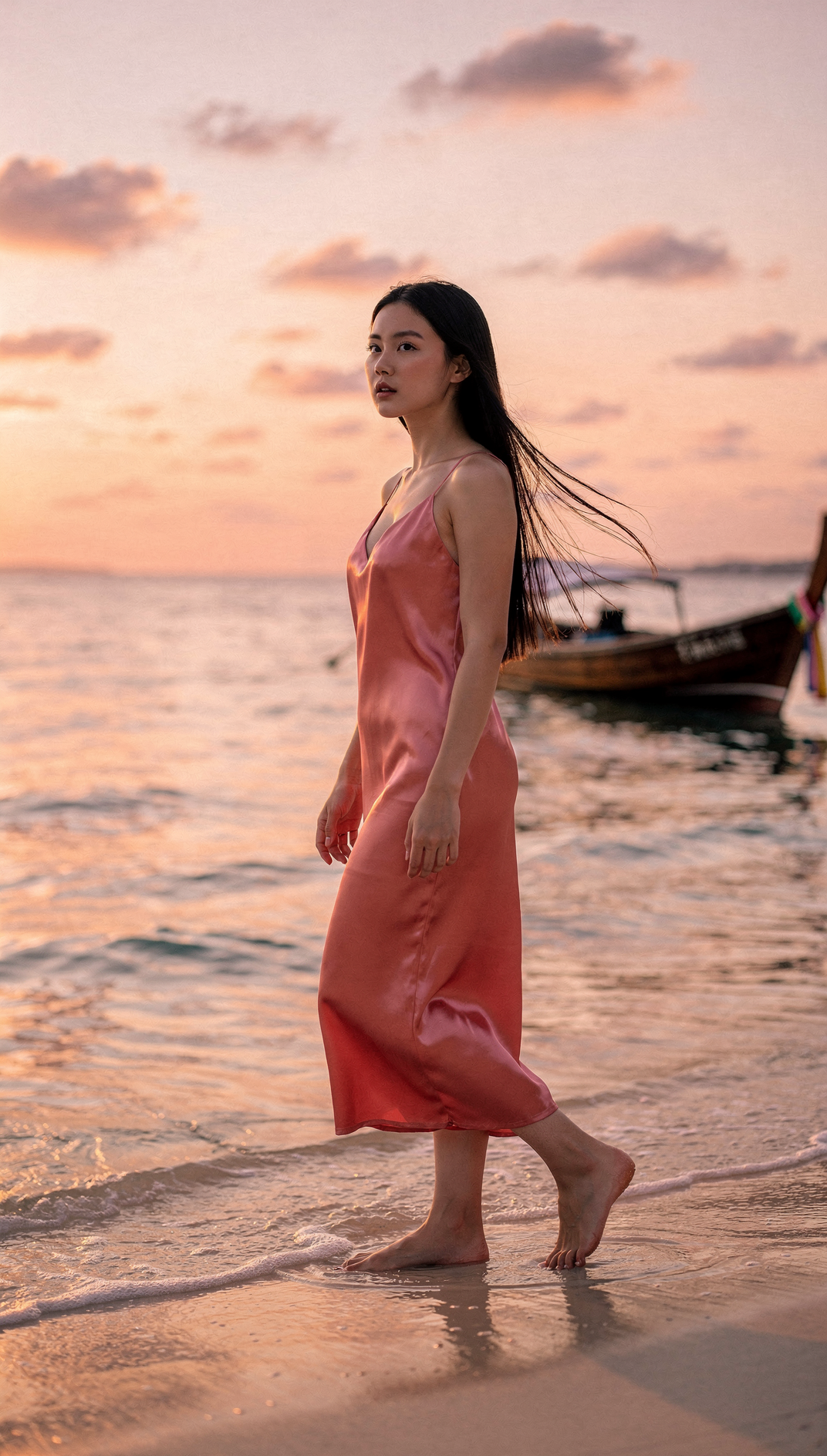
FLUX 2 Max |
Nano Banana 2: Strong photorealism — clean skin tones, convincing satin sheen, and a theatrical pink-purple sunset sky. The longtail boat and shallow ocean water are both clearly rendered. The atmospheric colour leans more stylised than the FLUX 2 outputs but is visually compelling.
Nano Banana Pro: The most natural-looking output — a calm pastel twilight palette with refined skin and hair detail. The composition and fabric drape feel closest to a genuine editorial photograph. Less dramatic than FLUX 2 but the most editorially clean result.
FLUX 2 Pro: The most atmospheric of the four — the sun sits visibly on the horizon, casting warm golden backlight through the satin dress and lighting the wet sand beneath the subject's feet. Satin sheen under directional backlight is the most convincingly rendered here.
FLUX 2 Max: Warm amber-pink sky, excellent longtail boat placement, and natural walking-pose dynamics. The satin dress catches the light well and the ocean surface reads with good depth. Slightly less dramatically lit than FLUX 2 Pro but arguably the most compositionally balanced overall.
FLUX 2 models produced noticeably more dramatic and atmospheric golden-hour scenes — the visible sun on the horizon, sand reflections, and backlit satin dress are distinct advantages for lifestyle and travel editorial content. NB Pro delivers the most natural and editorially clean portrait if a more subdued, fashion-forward aesthetic is preferred.
Test 2: Product Photography — Sneaker Poster
Product photography is a core commercial use case. This test goes beyond a simple product-on-white-background brief: we use a poster-style composition with an active scene background, requiring strong depth separation and creative layering. The sneaker must stay sharp and identifiable while the background creates atmosphere without overwhelming the product.
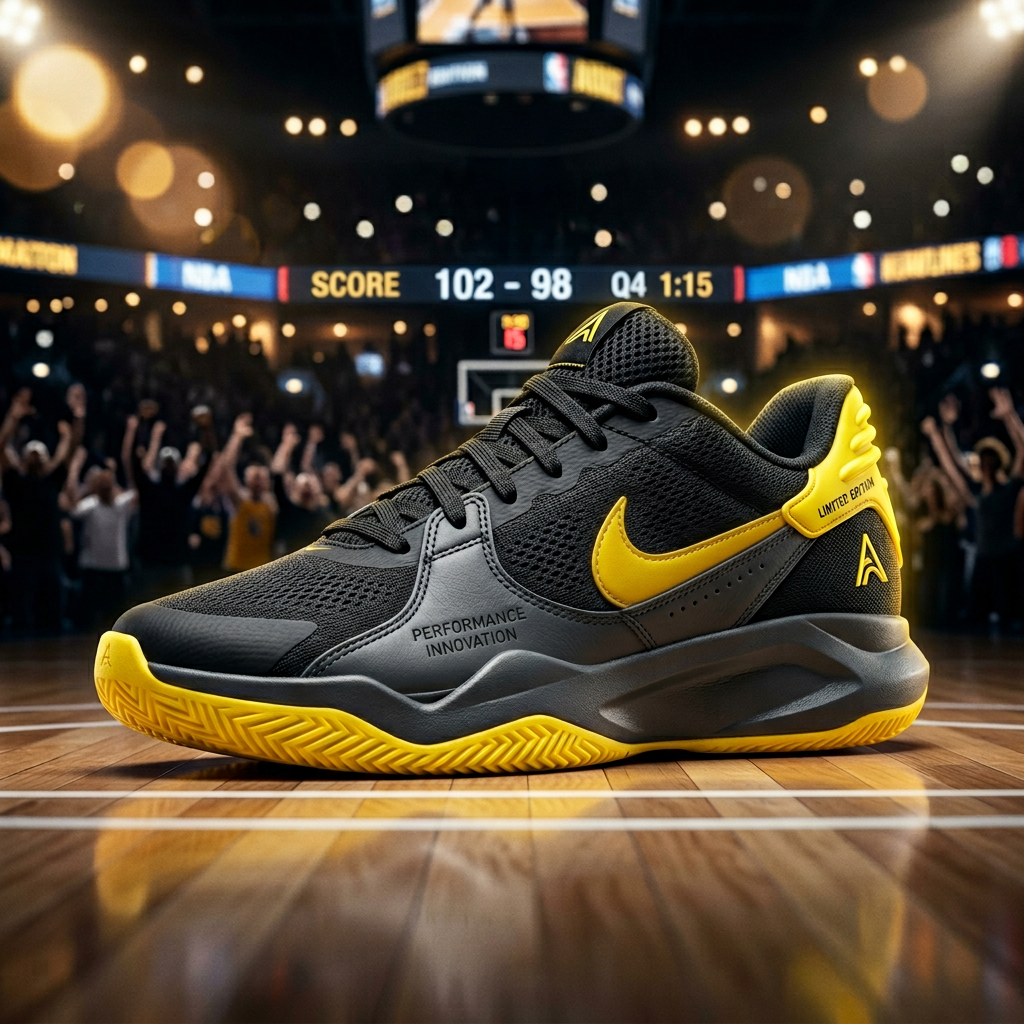
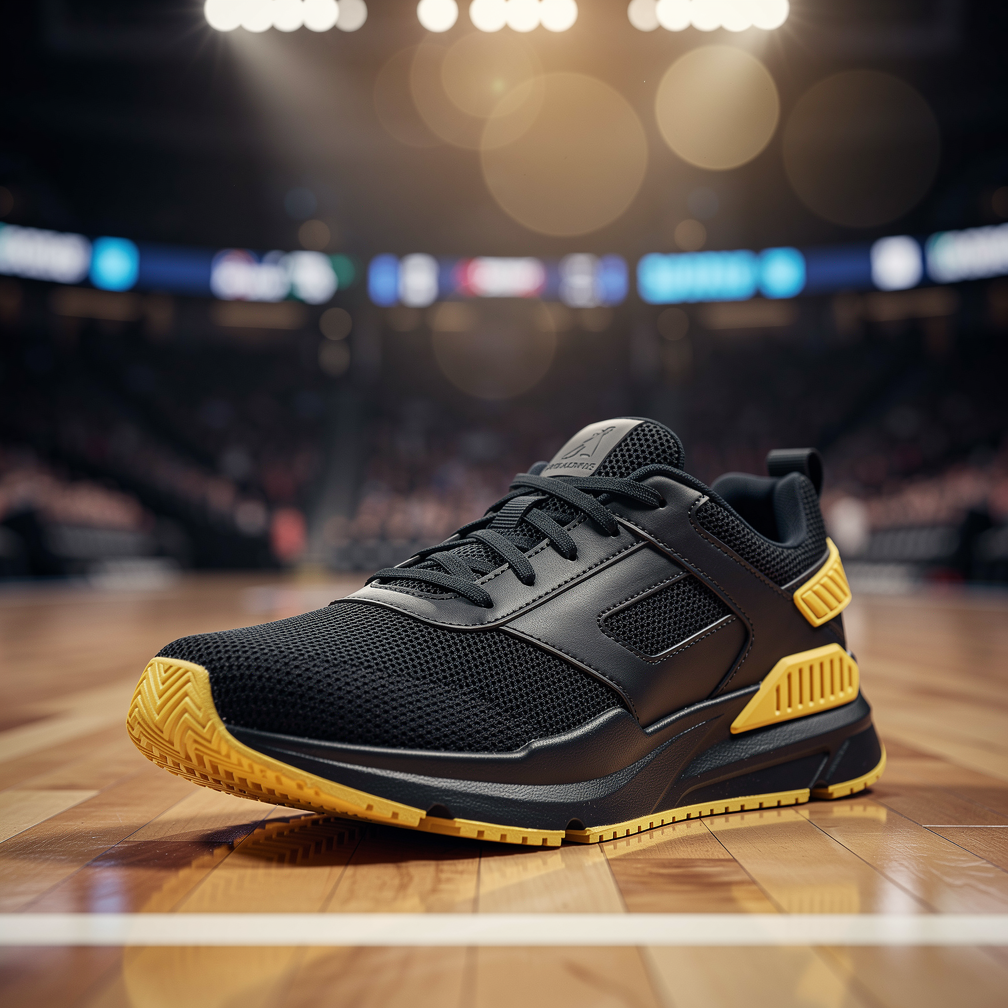
Test prompt: A premium limited-edition high-performance sneaker centred in the frame, poster-style product photography. The sneaker is a sleek low-top with a matte black technical mesh upper, dark charcoal grey overlapping leather panels along the side, a bold lemon-yellow outsole with sharp chevron tread pattern, and a lemon-yellow heel tab with a sculpted ridge detail. Shot from a low three-quarter angle at roughly 30 degrees — the side profile, toe box, and chevron outsole all clearly visible. Background: a high-energy professional basketball court scene — polished hardwood floor with a painted lane line at the base of the frame, fading upward into a blurred arena interior: crowd silhouettes, neon LED scoreboards, and dramatic overhead arena spotlights rendered as luminous bokeh circles. Strong depth separation: the sneaker in razor-sharp focus with every stitch, panel seam, and mesh texture visible, against the soft background blur. Dramatic studio-style rim lighting from the rear-left catches the edge of the matte black upper and creates a sharp highlight along the lemon-yellow outsole edge. Bold colour contrast between the all-black upper and the vivid lemon-yellow outsole. Commercial product poster composition, professional colour grading, square 1:1 format.
Nano Banana 2 | 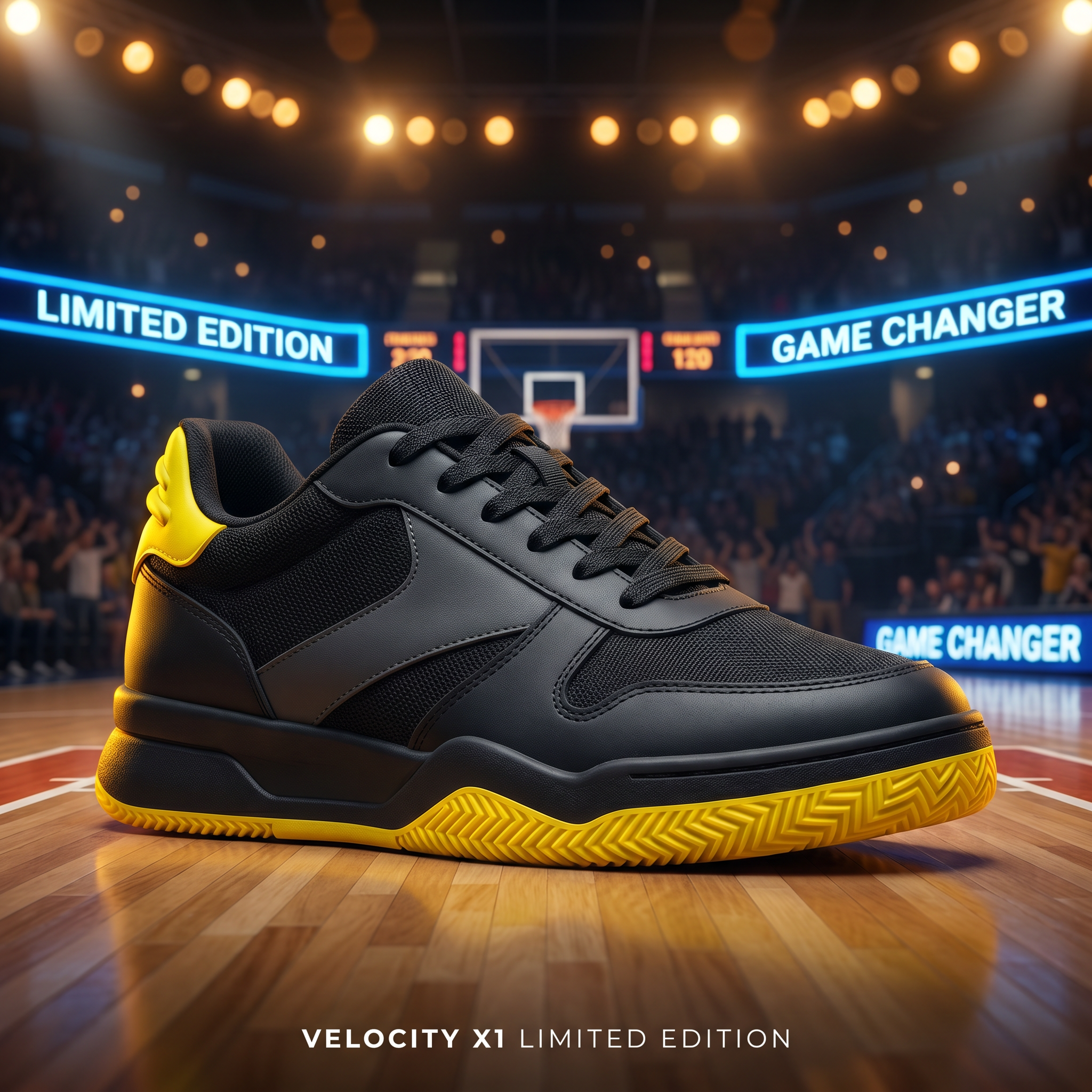
Nano Banana Pro |
FLUX 2 Pro | 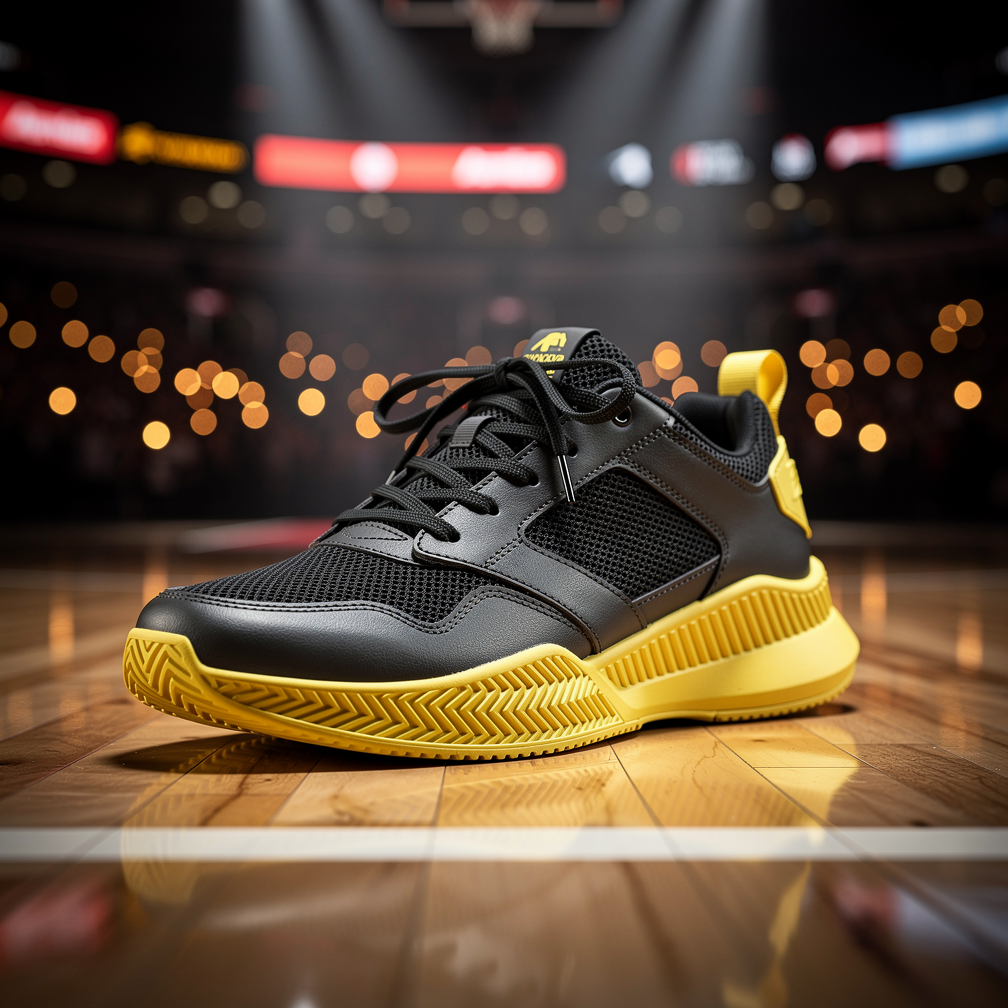
FLUX 2 Max |
Nano Banana 2: Solid product shot — the matte black mesh reads clearly and the lemon-yellow outsole contrasts well against the court floor. Background bokeh is present but the arena atmosphere feels slightly flat compared to FLUX 2 outputs.
Nano Banana Pro: Improved surface detail over NB2 — the charcoal grey panel distinction is more clearly rendered and the mesh texture shows finer weave detail. Rim lighting on the outsole edge is noticeably sharper.
FLUX 2 Pro: Strong studio lighting — the lemon-yellow outsole edge catches a clean sharp highlight that lifts the sneaker from the frame. The basketball arena background reads clearly without overwhelming the product. Poster-quality depth separation.
FLUX 2 Max: Best depth separation overall — the sneaker sits in crisp focus against a rich, softly lit arena background. The black-on-yellow colour contrast is maximally exploited with dramatic rim lighting. Campaign poster ready.
→ Note: The NB Pro sneaker output from this test was used as the reference image in Test 6 (Product Consistency, I2I section).
FLUX 2 models produced stronger lighting effects and depth separation for the black-on-yellow sneaker. For commercial product campaigns where the sneaker needs to pop from the frame, FLUX 2 Pro or Max is the clear choice. At lower budgets, NB Pro's surface texture rendering makes it the stronger Nano Banana option.
Test 3: Cinematic Scene — Nostalgic Beach
A cinematic scene requires more than a single subject — it demands compositional grammar, atmosphere, emotional resonance, and technical execution (depth, light quality, grain). This test uses a warm nostalgia prompt with three subjects, a wide-open natural setting, and a specific film photography aesthetic direction.
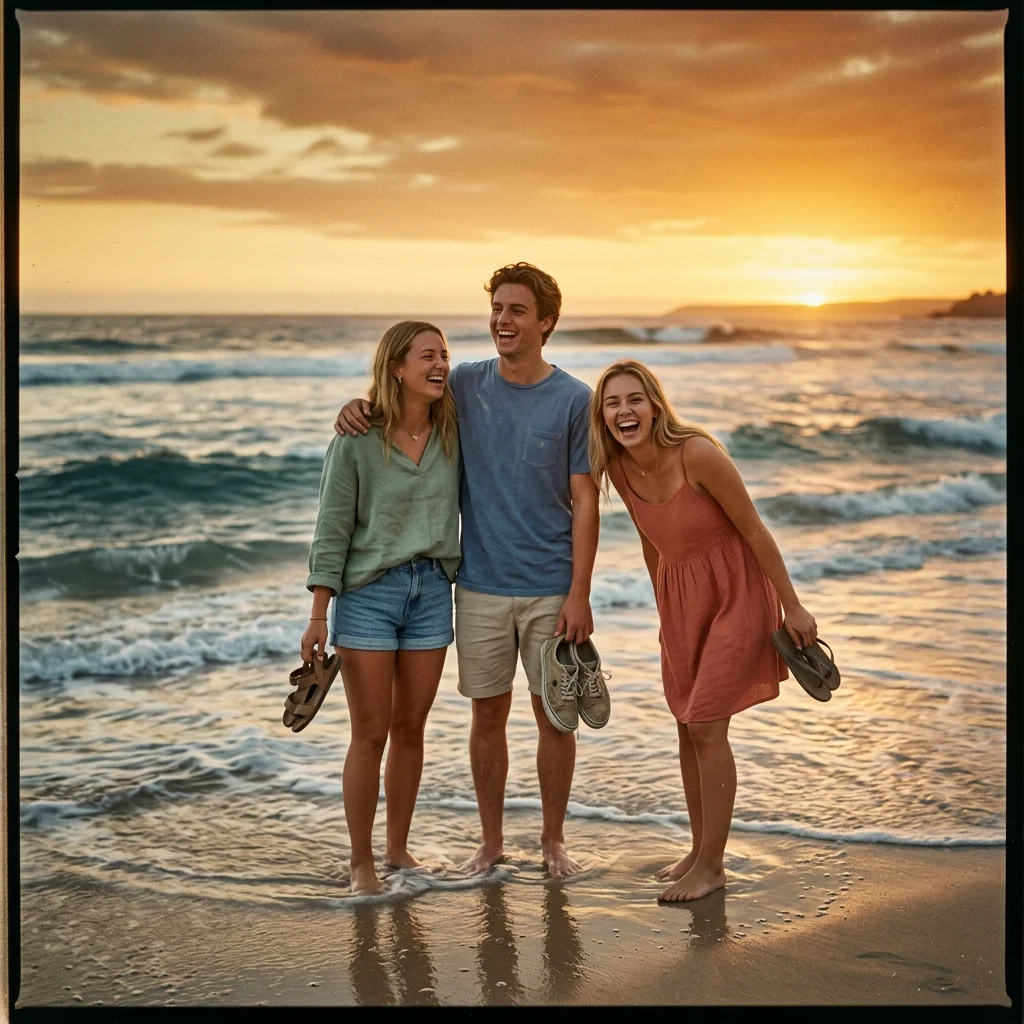
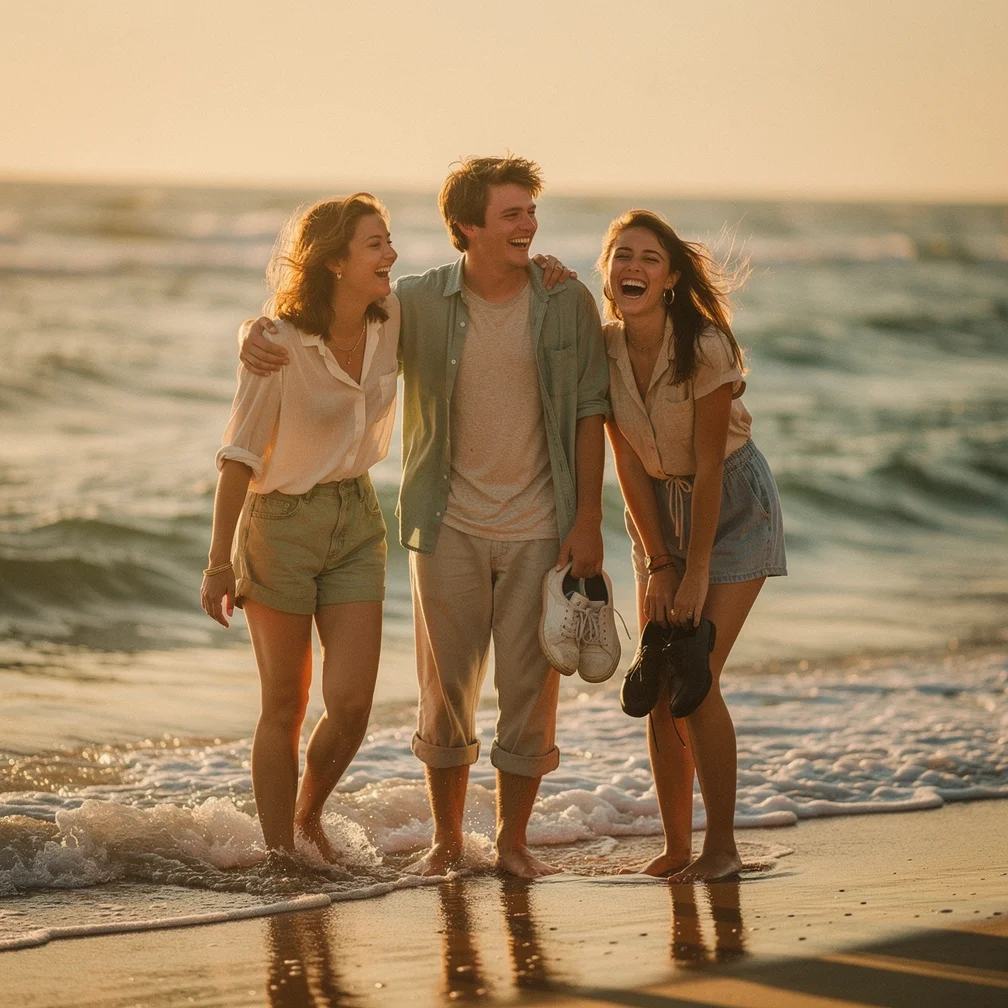
Test prompt: A nostalgic, sun-drenched beach scene at the shoreline in the final 30 minutes of golden hour — the sky already shifting from gold to deep amber. Two young women and one young man stand together at the water's edge: all three are barefoot, holding their shoes in their hands, mid-laugh as a gentle wave retreats around their ankles. They are dressed casually in light summer clothes with faded, sun-bleached colours. One woman has her arm around the man's shoulder; the other leans slightly forward, laughing toward the camera. The ocean behind them is deep blue-green, waves blurred with a suggestion of motion, the horizon softened. Colour palette: warm and slightly desaturated — faded gold, sage green, dusty coral — reminiscent of a physical photograph left in sunlight for years. Shot with a vintage 50mm f/1.8 film camera: soft halation blooming on the highlights where skin meets sunlight, organic 35mm film grain throughout, subtle natural lens vignette at the edges. Timeless, carefree, emotionally warm — the feeling of a 1970s Kodachrome slide just pulled from the projector, square 1:1 format.
Nano Banana 2 | 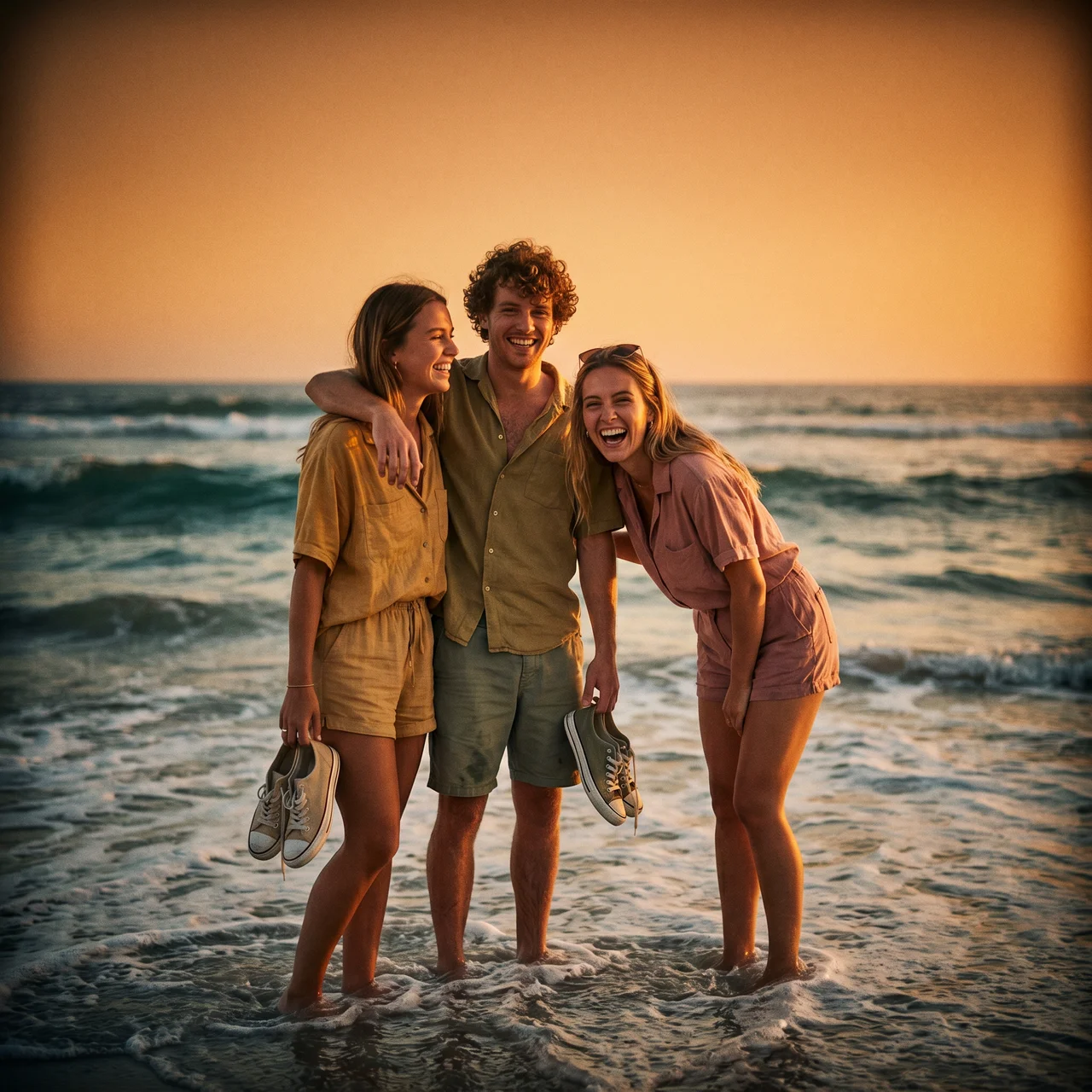
Nano Banana Pro |
FLUX 2 Pro | 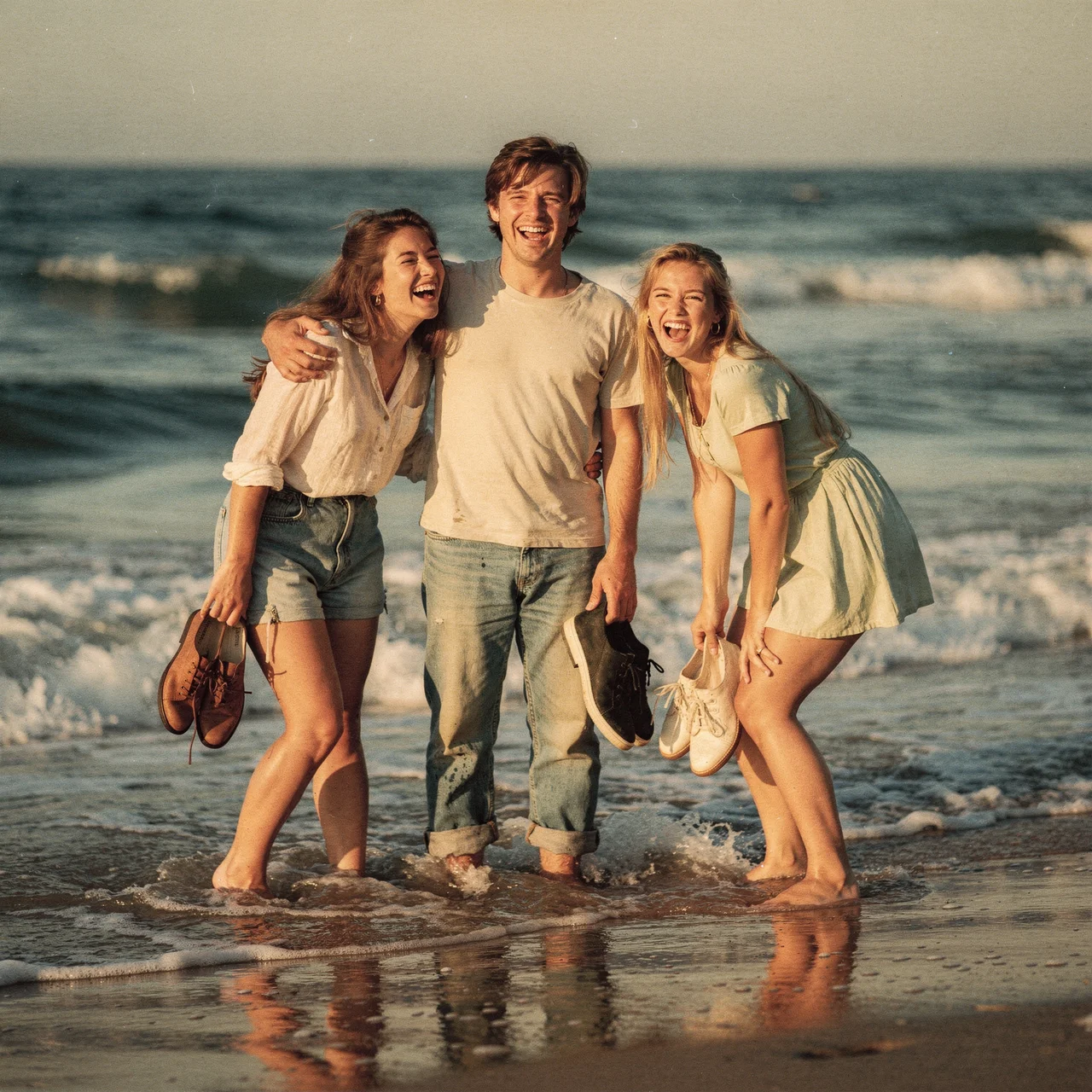
FLUX 2 Max |
Nano Banana 2: All three subjects are correctly placed and naturally posed at the water's edge. The warm golden hour light is present, but the overall rendering feels more modern and digitally clean — smooth skin tones and colour saturation without the intended film-era degradation.
Nano Banana Pro: Strongest figure arrangement of the four — all three subjects are well-posed and the wave detail at their feet is convincingly rendered. Colour palette is warm and cohesive, but leans polished rather than vintage.
FLUX 2 Pro: Authentic vintage film look — warm desaturation, halation blooming on highlight edges, convincing Kodachrome-era colour palette, and organic grain throughout. The most emotionally evocative of the four outputs.
FLUX 2 Max: Richest atmospheric rendering — ocean water, wave motion, and warm amber light on skin all carry strong physical depth. The film grain and lens vignette feel intentional. FLUX 2 Max's atmospheric strength shows clearly in this scene type.
FLUX 2 models demonstrated a clear advantage in vintage film aesthetic — the Kodachrome colour palette, organic film grain, and halation felt authentically period-correct rather than digitally simulated. For cinematic and storytelling content requiring a vintage atmospheric feel, FLUX 2 Pro and Max are the stronger choice.
Test 4: Ultra-Detail Anime Style — Silver WLOP/Guweiz Illustration
Anime and digital illustration are a massive content vertical with distinct quality markers — semi-realistic rendering, specific lighting logic, and a cohesive stylistic palette. This test uses a demanding prompt referencing the WLOP/Guweiz illustration aesthetic: a technical brief requiring precise atmospheric lighting, a specific compositional angle, and a strictly unified cool monochromatic colour palette. The key question is not just quality but faithfulness — does the model stay within the brief's aesthetic world?
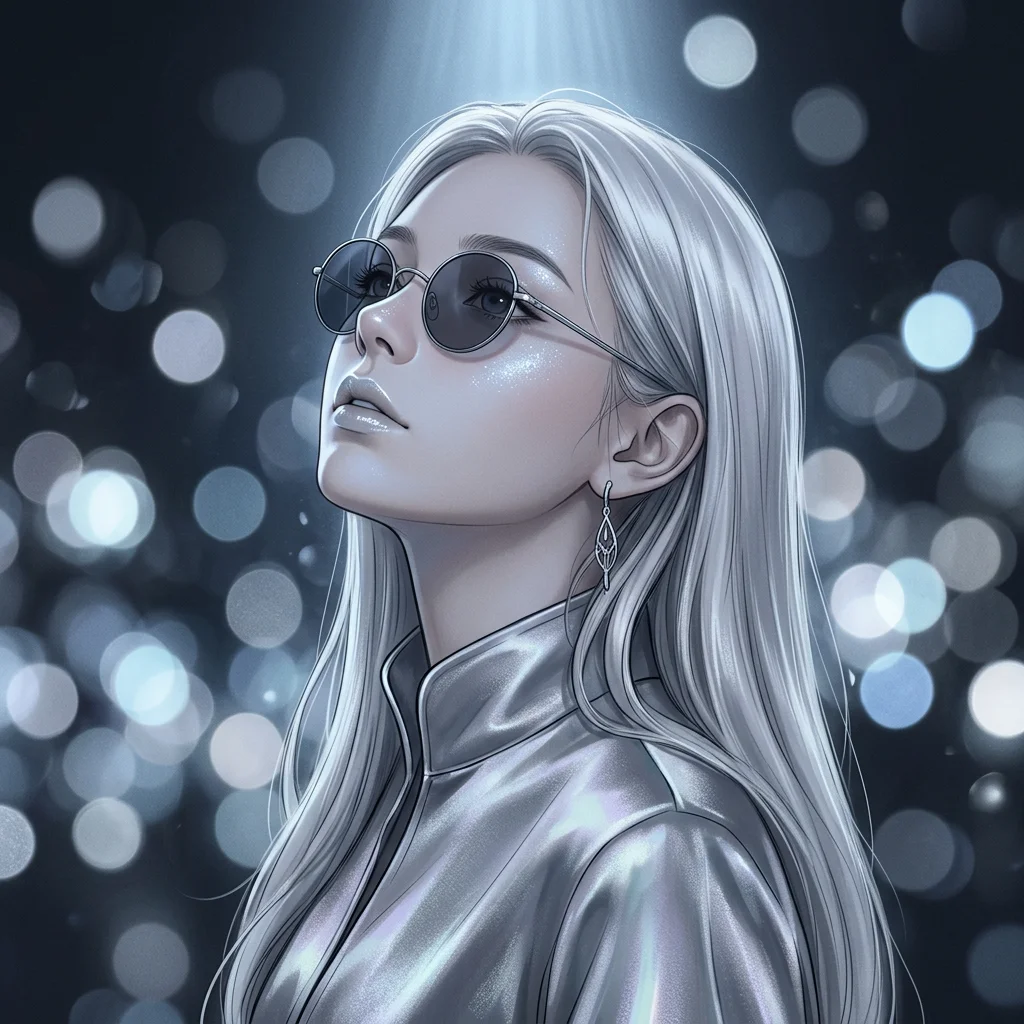
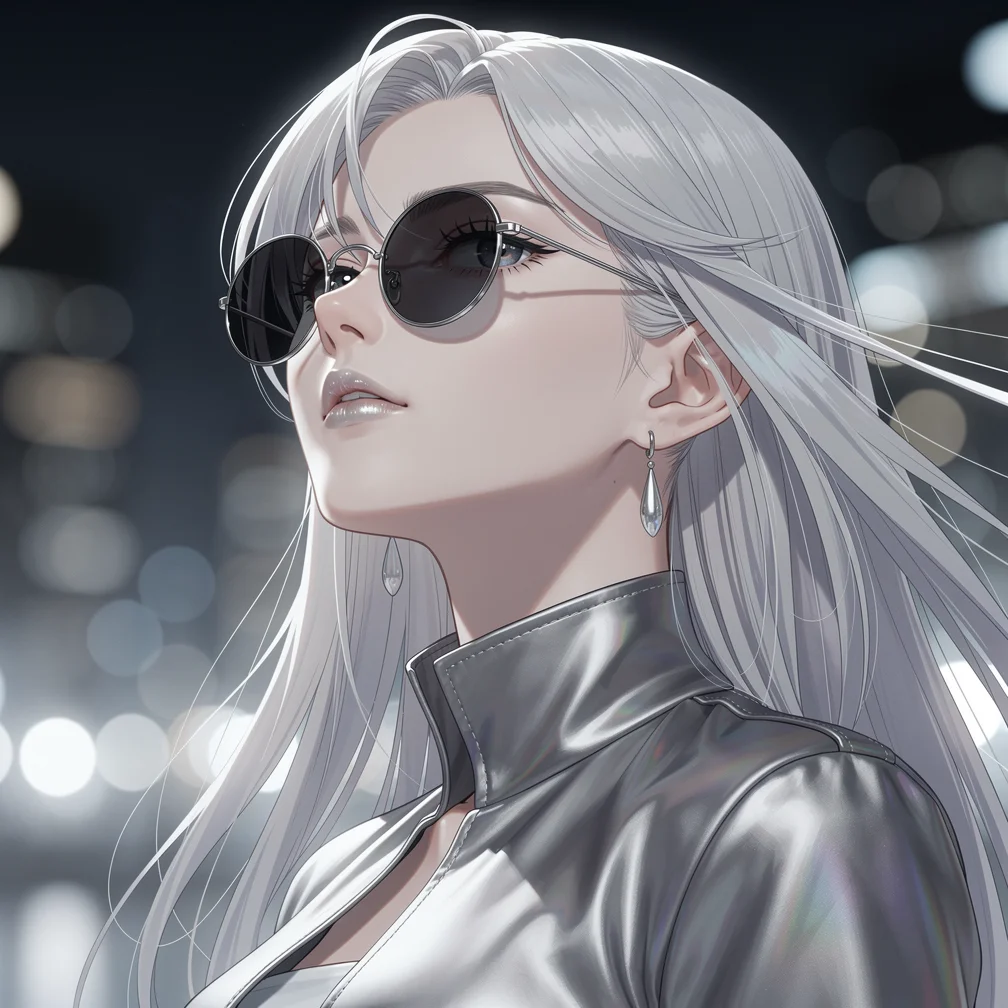
Test prompt: High-end digital illustration, semi-realistic anime style reminiscent of WLOP or Guweiz. Subject: a close-up, high-angle three-quarter shot looking slightly down at a stylish young woman, her face tilted upward with a calm, faraway expression. She has long sleek silver-white hair cascading downward, small round dark-tinted sunglasses with thin silver wire frames, and a delicate silver drop earring. She wears a high-collared silver-gray satin jacket with a subtle iridescent sheen. Lighting: cool silver-blue cinematic light from directly above, casting soft downward shadows. Background: dark night with large out-of-focus bokeh circles entirely in silver, pale blue, and icy white — no warm tones. Pale silvery lip gloss, flawless cool-toned porcelain skin. The entire image unified in a single cool silver-white-blue colour palette, moody and ethereal atmosphere. 8K resolution, intricate detail, square 1:1 format.
Nano Banana 2 | 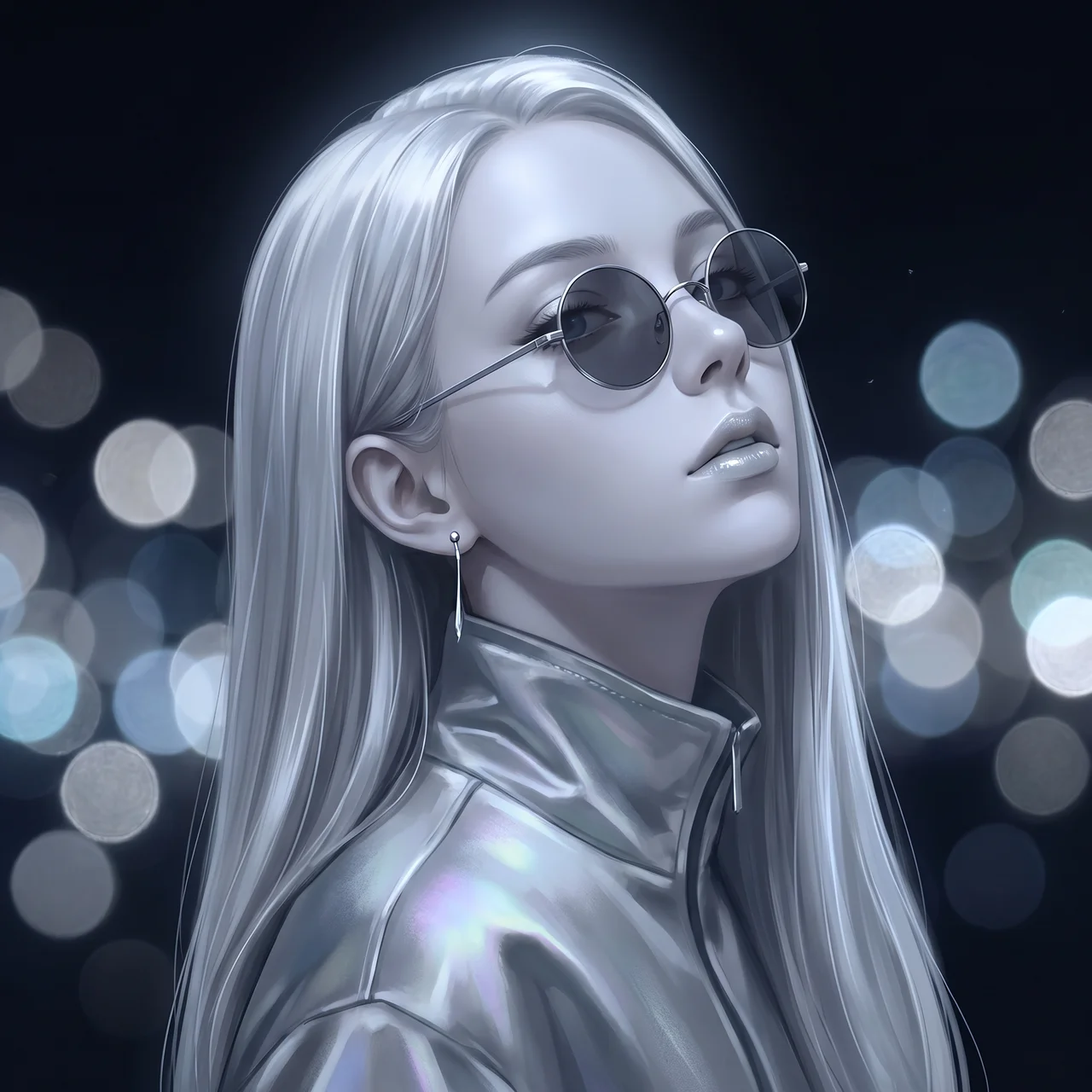
Nano Banana Pro |
FLUX 2 Pro | 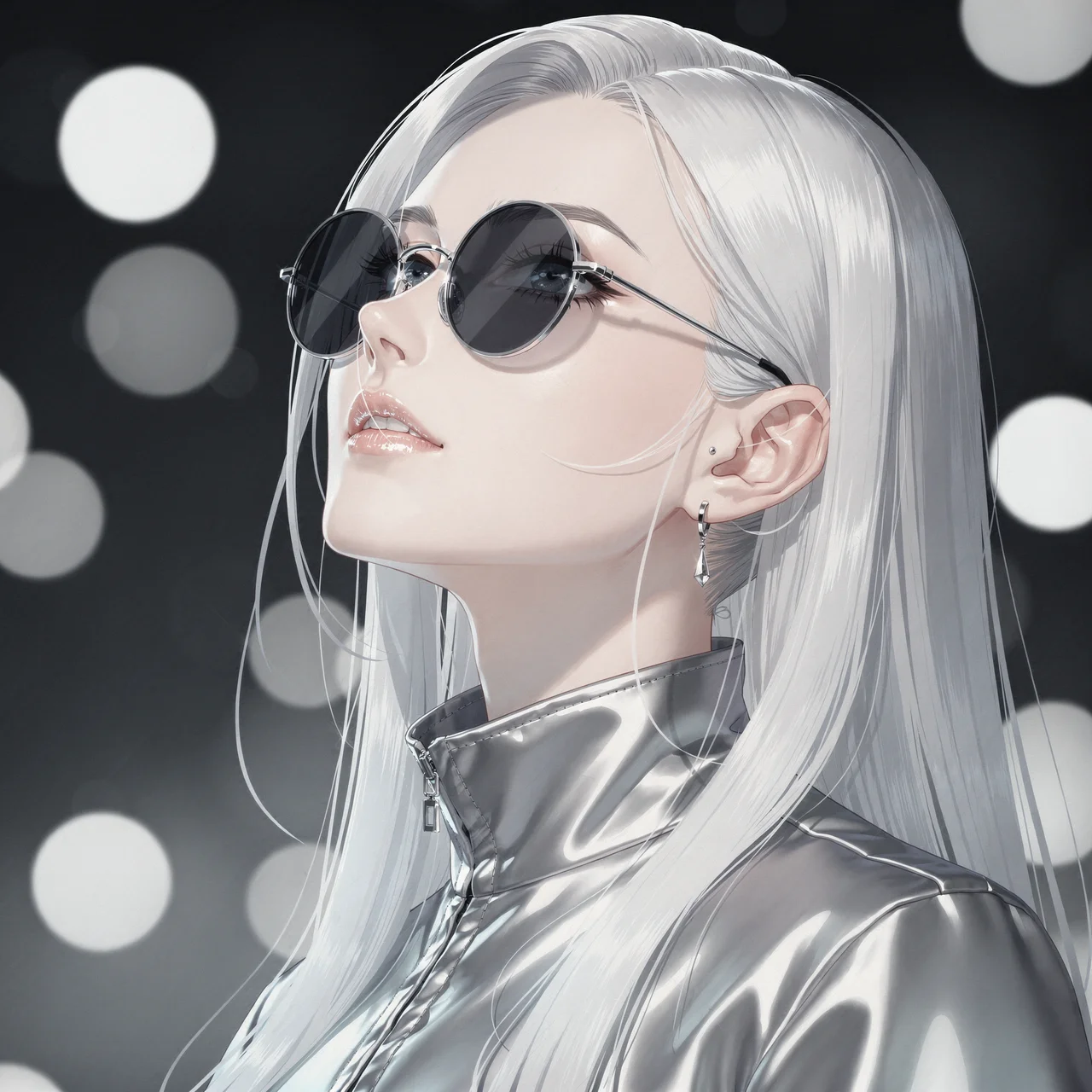
FLUX 2 Max |
Nano Banana 2: Semi-realistic output with a noticeable 3D CG render quality — skin, hair, and the satin jacket have a polished digital sculpt sheen rather than the flat illustrative hand-drawn quality of traditional anime. The cool silver palette is broadly respected and the high-angle composition is correct.
Nano Banana Pro: Similar 3D render tendency to NB2, but with more refined detail — the round wire-frame sunglasses and earring are clearly rendered. High-angle composition is well-executed. Still reads more as CG illustration than flat Japanese anime.
FLUX 2 Pro: More faithful to the WLOP/Guweiz anime brief — the illustration sits clearly in the flat-shading, hand-drawn anime space rather than 3D rendering. Cool silver-blue bokeh palette adherence is strong, with no warm tones bleeding in.
FLUX 2 Max: Best anime illustration quality — silver-white hair carries fine strand detail that feels hand-drawn, the iridescent satin jacket has an authentic illustrative sheen, and the image stays strictly within the brief's cool palette. Closest to the target WLOP/Guweiz aesthetic.
FLUX 2 models more faithfully interpreted the WLOP/Guweiz semi-realistic drawing style for this anime illustration brief. Nano Banana models' Gemini architecture shows a tendency toward 3D-rendered photorealism that pulls away from traditional flat anime illustration conventions — the results look impressive but stylistically different from the brief.
Test 5: Text Rendering — Cappuccino Lettering
Embedding legible text inside a photorealistic image remains one of the most reliable indicators of a model's language-visual coherence. We use a prompt where the text must appear naturally rendered in a real-world material — cocoa powder drawn on coffee foam — rather than cleanly overlaid as digital typography. This tests both character accuracy and physical realism of the text rendering simultaneously.
Test prompt: A close-up overhead top-down shot of a freshly made cappuccino in a wide white ceramic café cup, resting on a raw wooden café table with visible wood grain texture. The coffee surface is covered in rich, smooth microfoam — dense and velvety, with a light beige-tan tone. In the centre of the foam, a barista has hand-drawn a small stylised heart in latte art using a fine chocolate drizzle. Slightly below the heart, the words "I love you" are written directly on the foam surface using finely sifted cocoa powder — the letters rendered in clean, legible handwriting-style cursive script, warm dark-brown cocoa colour against the lighter foam. The text sits naturally embedded in the foam surface — not floating above it, not digitally overlaid. To the right of the cup, a small silver spoon rests on a folded paper napkin. Natural café window light from the upper-left — warm, diffused, no harsh shadows. Photorealistic, shallow depth of field with the cup edge softly out of focus, square 1:1 format.

Nano Banana 2 | 
Nano Banana Pro |

FLUX 2 Pro | 
FLUX 2 Max |
Nano Banana 2: 'I love you' text is legible with clean cursive character rendering. The foam texture is realistic, the cocoa lettering sits naturally embedded in the surface, and the silver spoon and napkin are correctly placed alongside the cup.
Nano Banana Pro: Cleanest text rendering — all characters of 'I love you' are individually clear and the cursive letterforms are well-formed. The heart latte art is correctly placed alongside the text. Foam density and surface texture are the most convincing.
FLUX 2 Pro: Accurate text rendering with slight stylistic variation in letterform — 'I love you' is legible with correct character count. The warm café window light quality is strong. Cocoa powder texture reads as genuinely physical.
FLUX 2 Max: Full text accuracy with excellent cocoa-on-foam material realism — the lettering has the slightly uneven quality of powder sifted through a stencil, which feels authentic. The latte art heart is clearly defined.
All four models successfully rendered 'I love you' legibly — a stronger collective result than expected for text-in-image generation. The main differences are stylistic: NB Pro's lettering is cleanest and most typographically refined, while FLUX 2 Max's cocoa powder texture rendering is the most materially convincing. For commercial text-in-image content, output quality is similar across all four models and the choice is based on aesthetic preference.
PART 2 — IMAGE-TO-IMAGE TESTS
Tests 6 and 7 provide reference images as input. This isolates each model's ability to absorb, interpret, and incorporate real visual information — a critical capability for brand consistency, creative editing, and multi-asset workflows.
Test 6: Product Consistency — Sneaker in a New Scene (Reference-Guided)
Brand product assets must retain visual consistency when placed in new contexts. In this test, we take the best sneaker output from Test 2 and use it as a reference image for all four models. Each model must place the same sneaker — preserving its silhouette, colourway, and material detail — into a completely new environmental scene.
Reference image: The best-quality sneaker output from Test 2 (used as single reference across all four models).
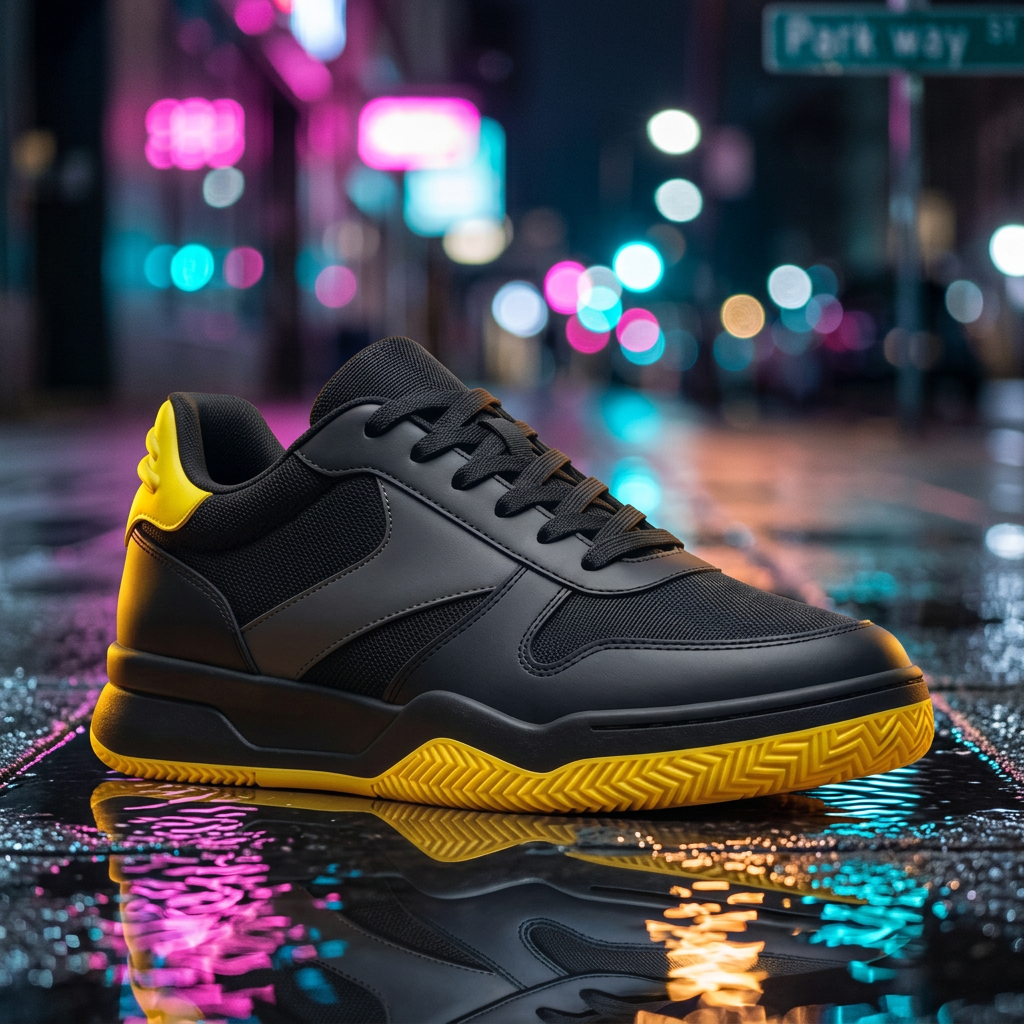
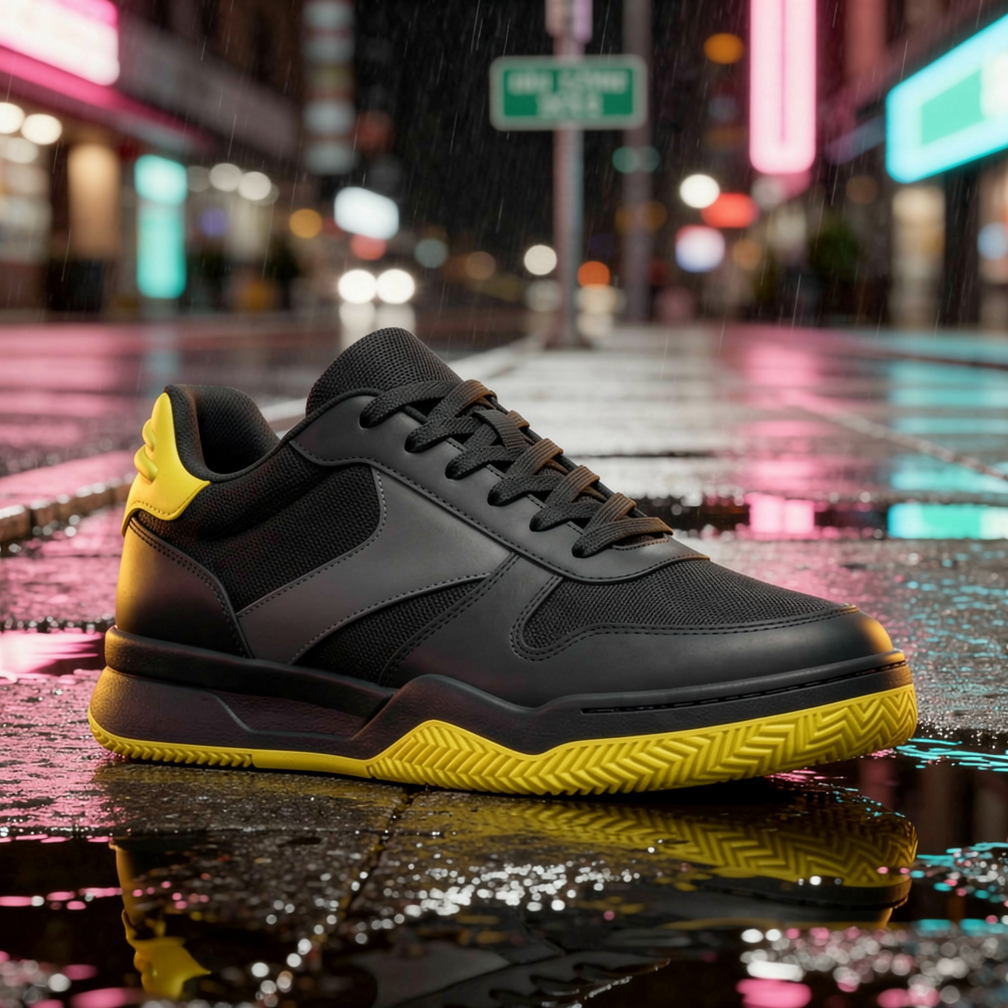
Variation prompt: Using the provided sneaker reference image — preserve the exact silhouette, colourway (matte black technical mesh upper, dark charcoal grey overlapping leather panels, lemon-yellow outsole with chevron tread pattern, and lemon-yellow heel tab), and identifying design details of the sneaker. Place this identical sneaker on a rain-wet urban sidewalk at night. The pavement is dark grey concrete, slick and reflective after recent rain — shallow puddles collect between the pavement joints, each one reflecting distorted neon-coloured city light from overhead signs: electric pink, cyan, and amber neon reflections shimmer and ripple in the puddles directly around and beneath the shoe. The sneaker remains in razor-sharp focus — identical in silhouette and colourway to the reference image, every design detail preserved. Background: a shallow-depth-of-field city street at night, bokeh circles of pink, cyan, and white, the edge of a wet street sign barely readable in the far distance. Shot from the same low three-quarter angle as the original. Photorealistic, commercial product photography quality, cinematic city night colour grading, square 1:1 format.
Nano Banana 2 | 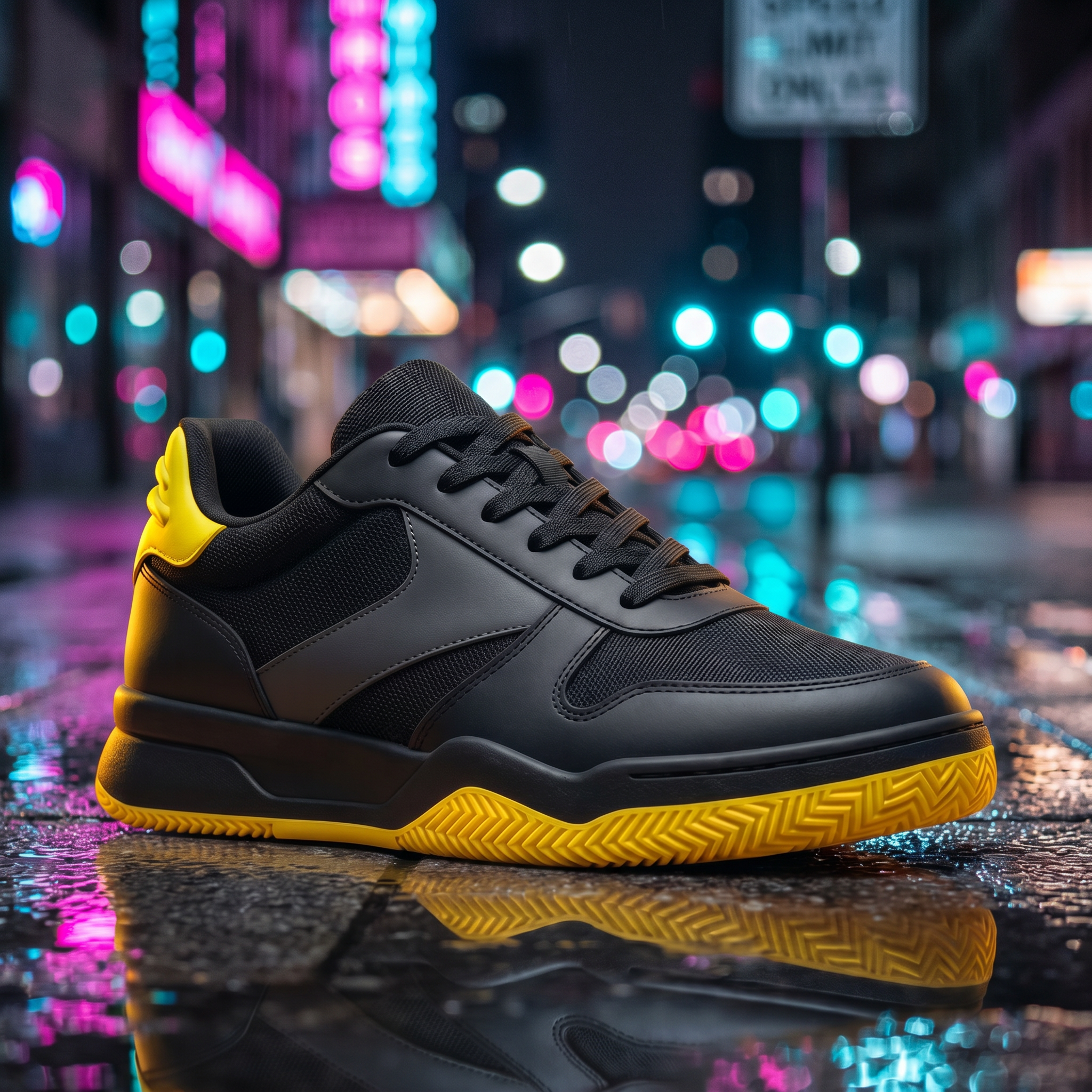
Nano Banana Pro |
FLUX 2 Pro | 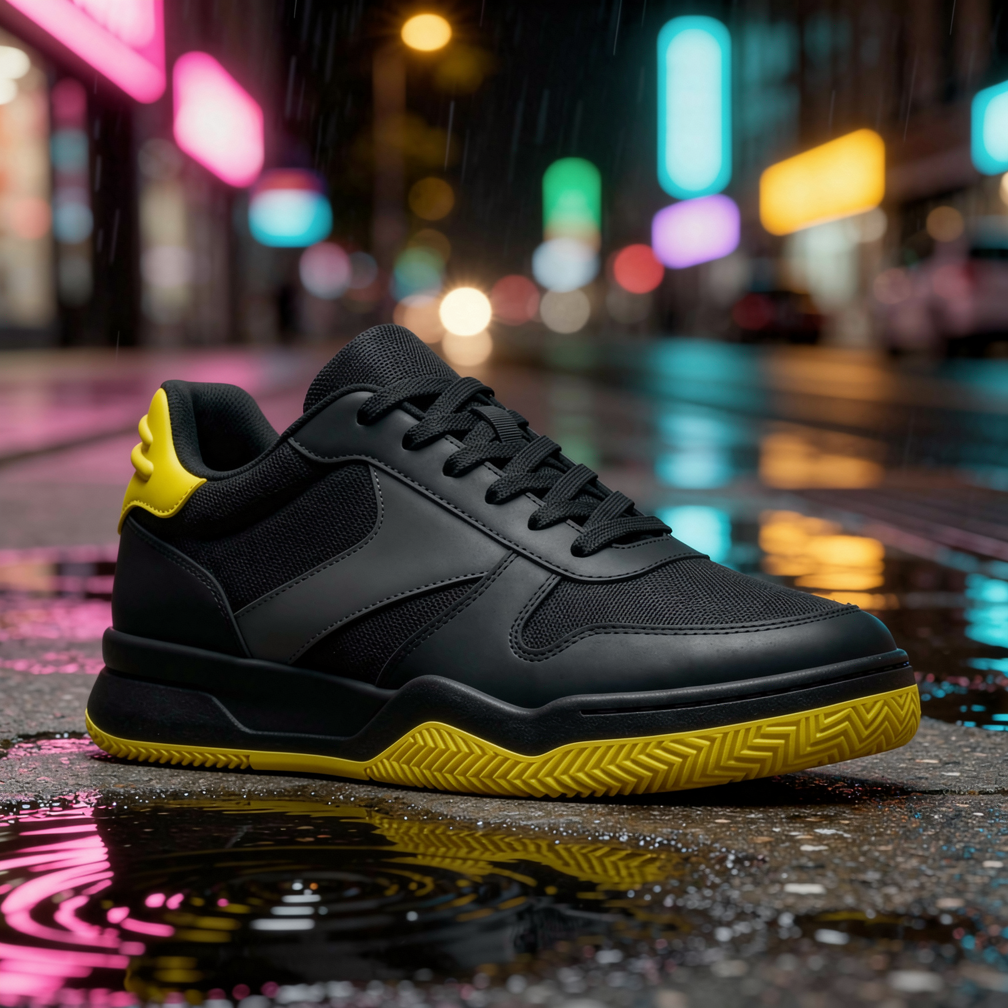
FLUX 2 Max |
Nano Banana 2: Good sneaker identity retention — matte black upper and lemon-yellow outsole are preserved. The neon wet-street environment is vivid with clear pink, cyan, and amber puddle reflections. Silhouette matches the reference well.
Nano Banana Pro: Strong colourway fidelity — the charcoal grey panel distinction remains visible alongside the black upper, and the lemon-yellow outsole stays vivid against the dark pavement. Neon puddle reflections are the richest of the Nano Banana outputs.
FLUX 2 Pro: Good silhouette and colourway preservation with FLUX's atmospheric rendering making the wet urban environment feel cinematic. The lemon-yellow outsole stands out sharply against the dark concrete and the neon reflections carry convincing colour depth.
FLUX 2 Max: Strong reference fidelity and the most cinematically rendered neon night scene — puddle reflections carry deep colour saturation, the bokeh city lights in the background are beautifully rendered, and the lemon-yellow outsole edge reads sharply and clearly.
All four models performed well in this I2I test — the sneaker identity is broadly preserved and the neon night scene is consistently strong across all outputs. Differences are primarily stylistic rather than quality-based. For brand consistency I2I workflows, any of the four models would deliver reliable results; the choice comes down to the desired final aesthetic and budget.
Test 7: Multi-Image Reference — Fashion Outfit Composition (5 Inputs)
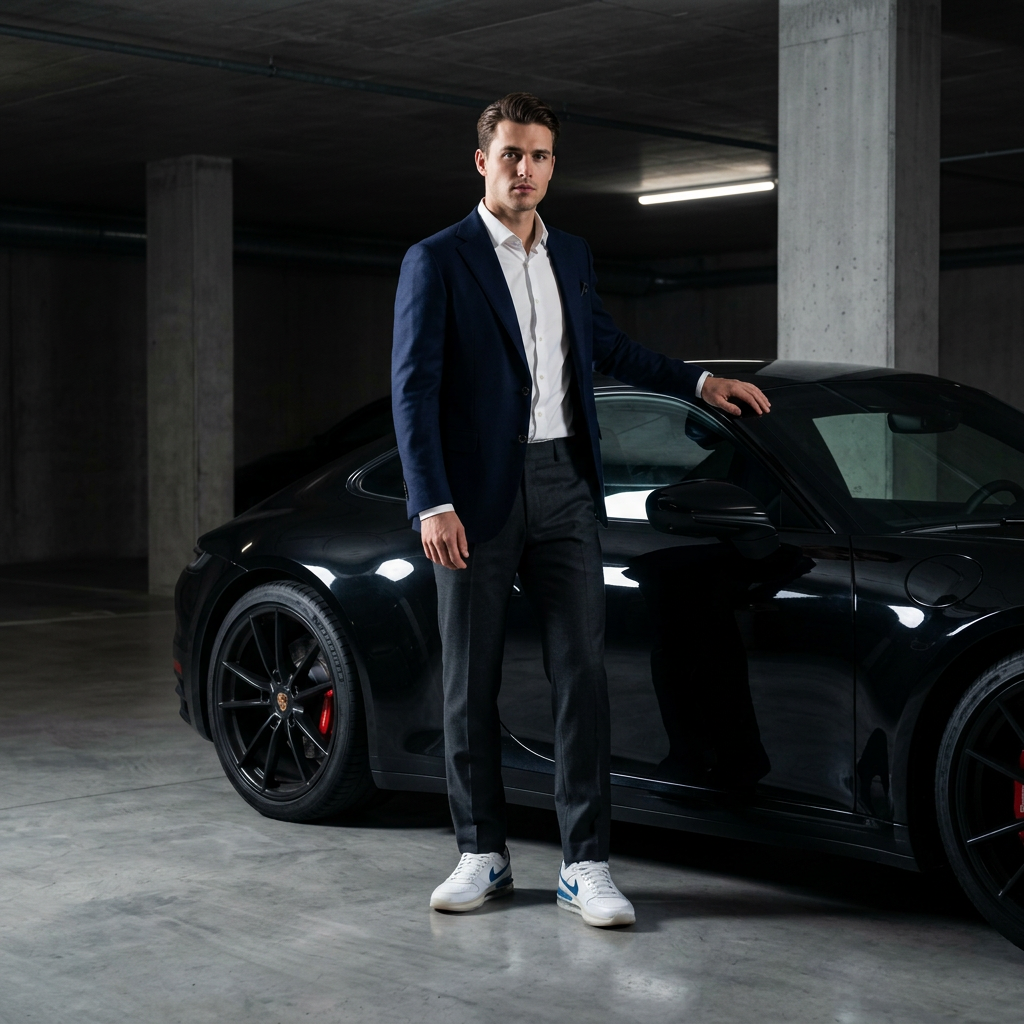
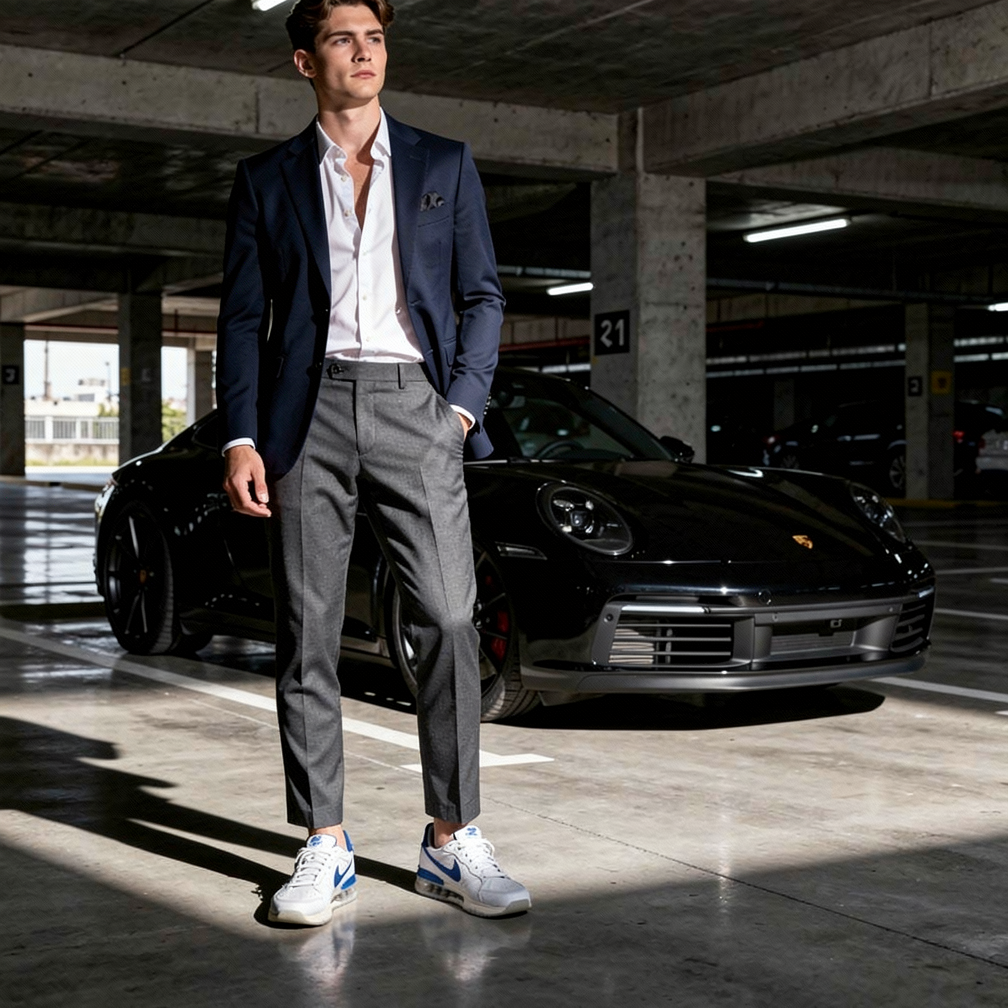
The most demanding test in this comparison: synthesising five distinct reference images into a single coherent output. Four fashion item images (jacket, shirt, trousers, shoes) are combined with one car image. Each model must generate a man wearing all four fashion items simultaneously, styled as a coherent outfit, standing beside the car. This tests multi-reference synthesis depth, subject coherence, and the ability to resolve conflicting visual inputs into a unified output.
Reference inputs: 5 images — jacket, shirt, trousers, shoes (sneaker), and car — all generated from scratch to serve as clean product-shot references.
Generation prompt (same across all models): Using the five provided reference images — four fashion items (jacket, shirt, trousers, shoes) and one car — generate the following scene: A stylish young man in his late 20s wearing all four fashion items from the reference images simultaneously, styled as a single coherent high-fashion outfit — the jacket worn open over the shirt, the trousers tailored and fitted, the shoes clearly visible at the base of the frame. He stands with relaxed confidence beside the car from the fifth reference image, one hand resting lightly on the car's roof or door handle, body at a slight three-quarter angle toward the camera. Setting: a sleek, modern underground parking structure — polished concrete floor, visible structural pillars, dramatic single-source side lighting casting one strong directional highlight along the edge of both the man and the car. The lighting is cinematic: high-contrast, hard-edged, editorial. Full-body shot from mid-shin upward. Photorealistic, commercial fashion photography quality. The car is identifiable and proportionally correct relative to the standing figure, square 1:1 format.

Reference images for Test 7: Jacket · Shirt · Trousers · Shoes · Car
Nano Banana 2 | 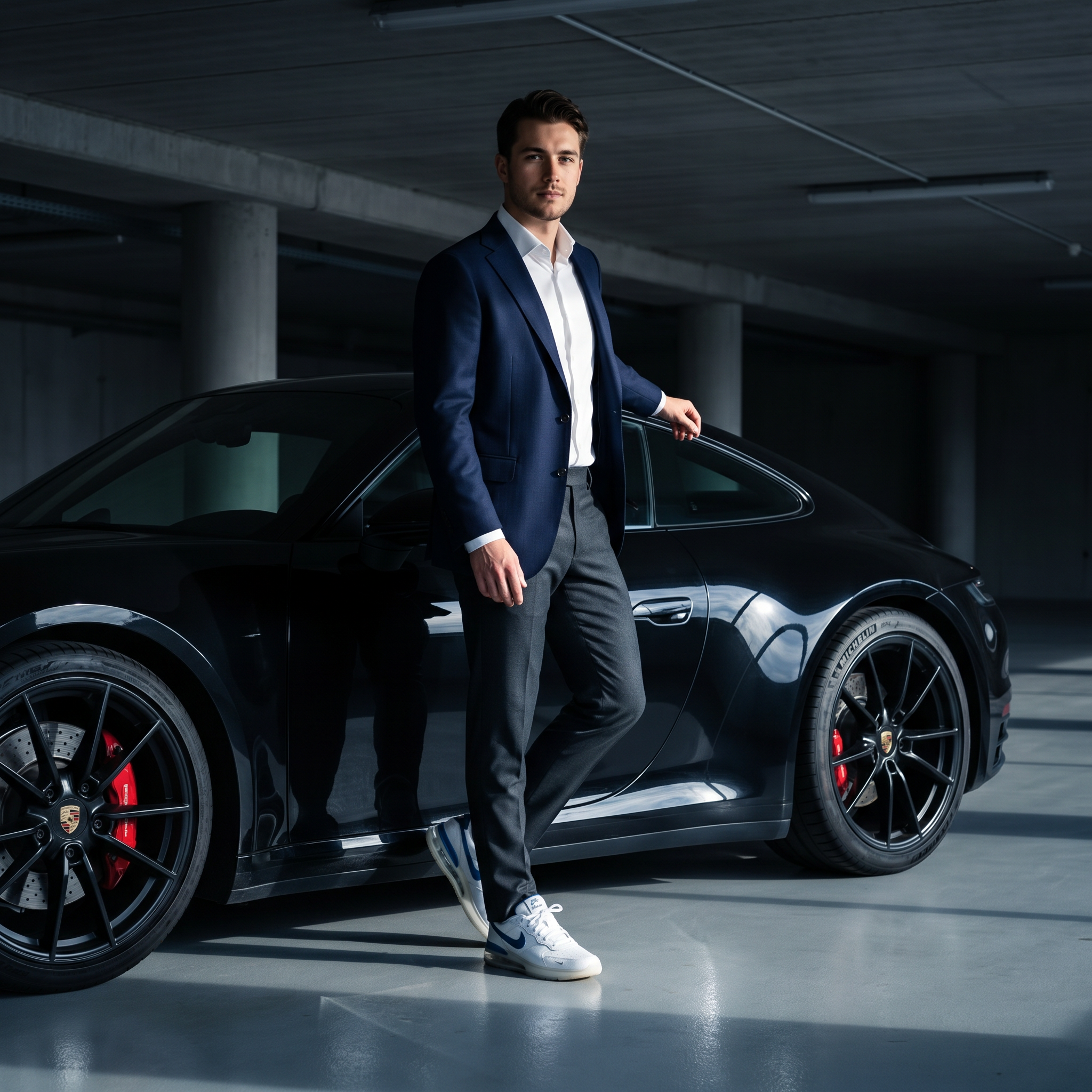
Nano Banana Pro |
FLUX 2 Pro | 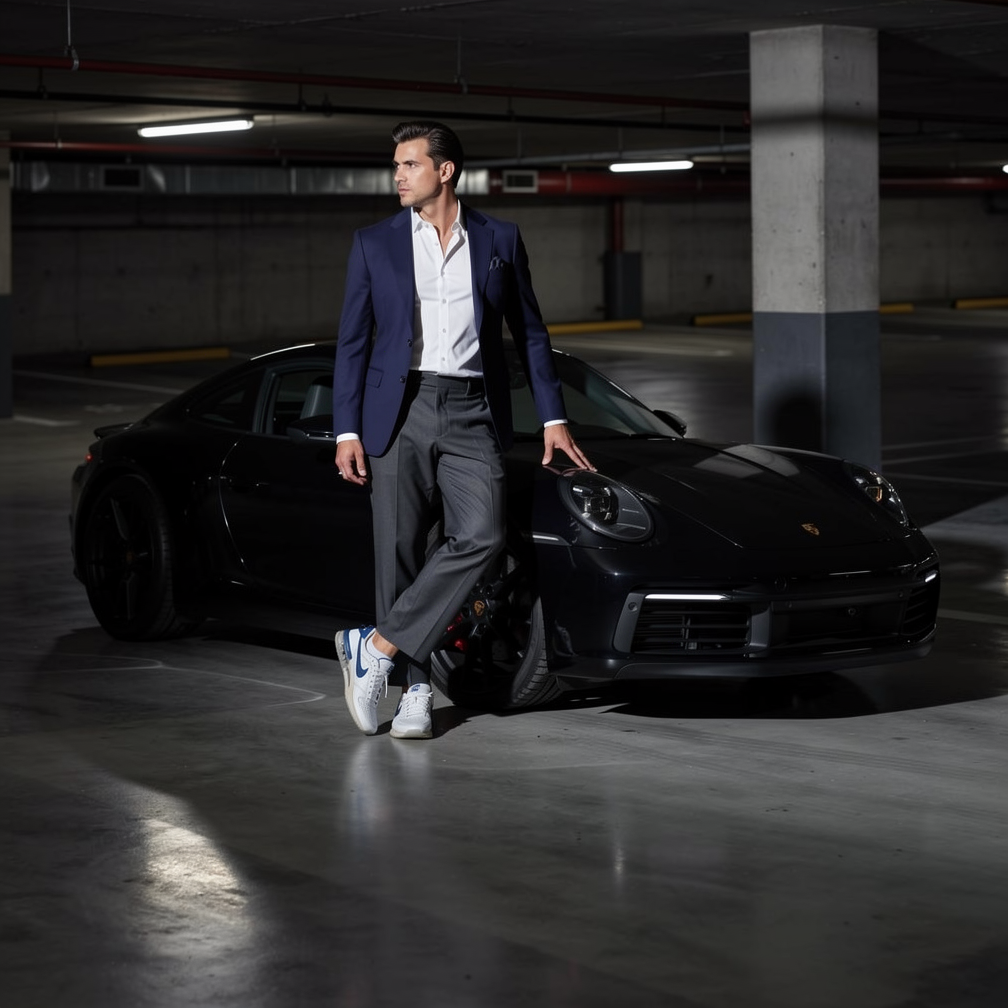
FLUX 2 Max |
Nano Banana 2: All five reference items are present — jacket over shirt, correctly fitted trousers, shoes visible at lower frame, and the car placed beside the figure at correct relative scale. The underground parking structure environment and directional side lighting are coherent. Reliable reference synthesis.
Nano Banana Pro: Good multi-reference synthesis with clear garment layering — jacket-over-shirt combination reads correctly. The car and figure integration is well-handled, and the cinematic side lighting creates convincing depth. Close to NB2 in reference fidelity.
FLUX 2 Pro: Reference fidelity is lower than the other three — some garment details are modified and the outfit does not fully match all five references. However, the composition is the most dynamically conceived: strong diagonal lines, dramatic environment, and a confident pose that reads like an actual fashion campaign. Better for directional inspiration than strict asset reproduction.
FLUX 2 Max: Best overall multi-reference synthesis — all four fashion items are correctly rendered, the figure-to-car integration is the most convincing, and the underground parking structure environment carries rich cinematic lighting depth. Most suitable for brand-controlled multi-asset workflows.
FLUX 2 Max demonstrated the strongest multi-reference synthesis, with all five inputs faithfully represented in a cohesive, fashion-quality output. FLUX 2 Pro's lower reference fidelity was the most notable deviation in the comparison — but its dynamic compositional quality makes it better suited to using references as creative direction rather than strict asset reproduction.
Test 8: Character Reference Consistency
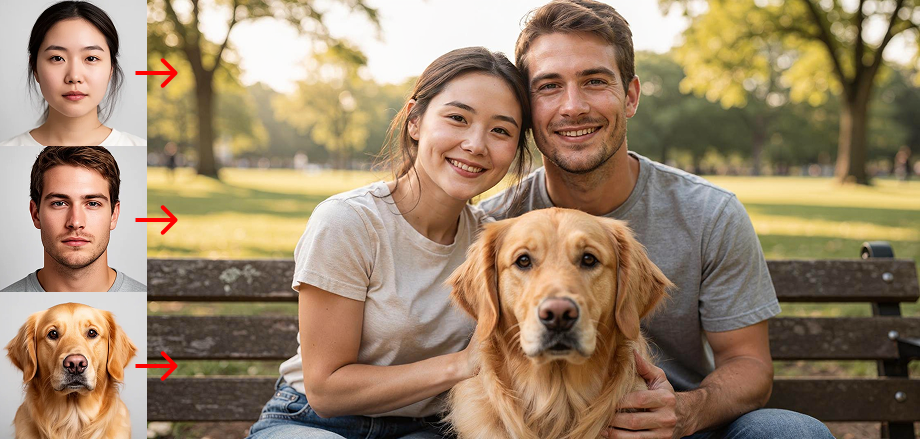
We have done this test for the Nano Banana series — now we apply the same to the FLUX 2 models. Character reference consistency tests whether a model can maintain a specific person's visual identity (face, skin tone, hair, and distinguishing features) across newly generated scenes, using only seed images as input. This is one of the most practically important capabilities for creative studios, game developers, and content creators who need repeatable characters across varied outputs.
For full methodology details — including the reference character design, prompt structure, and evaluation criteria — refer to our Nano Banana character consistency article. The same approach is applied here without modification, allowing direct comparison across all four models.
Reference input: Two seed images of the same original character — a young woman with distinctive facial features, used as character references for all four models.
Generation prompt: Consistent with the prompt used in the Nano Banana series article — same character, new scene context, photorealistic output.
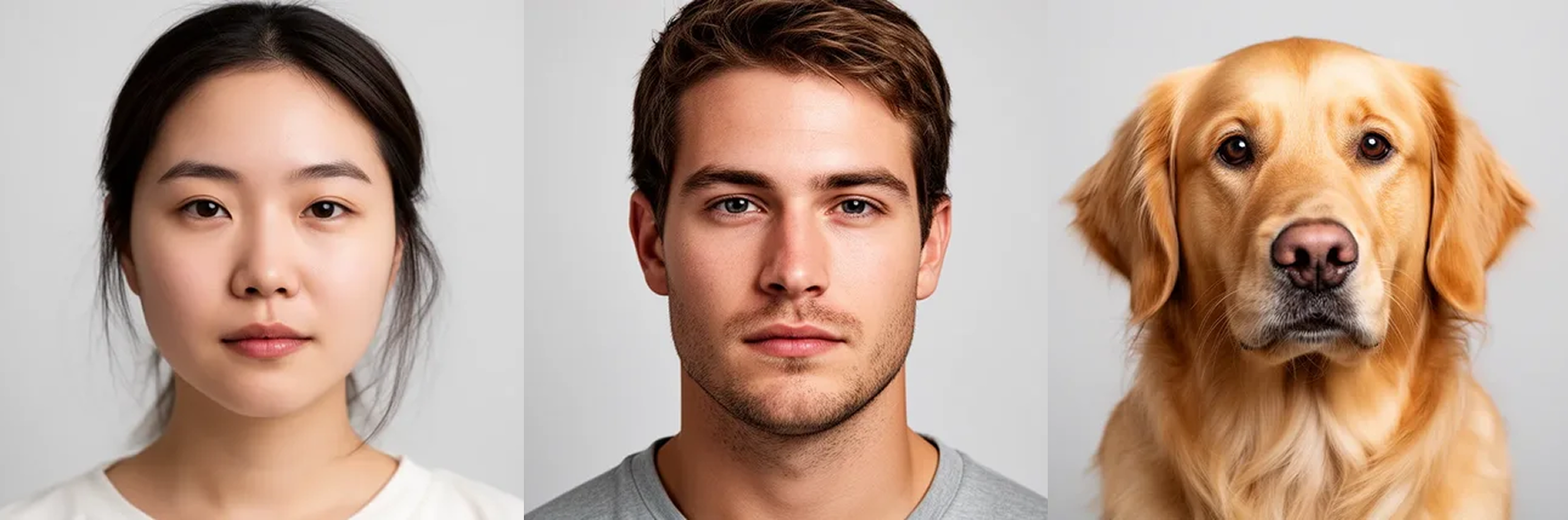
Input reference images used for Test 8 — the same character seed images applied to all four models.
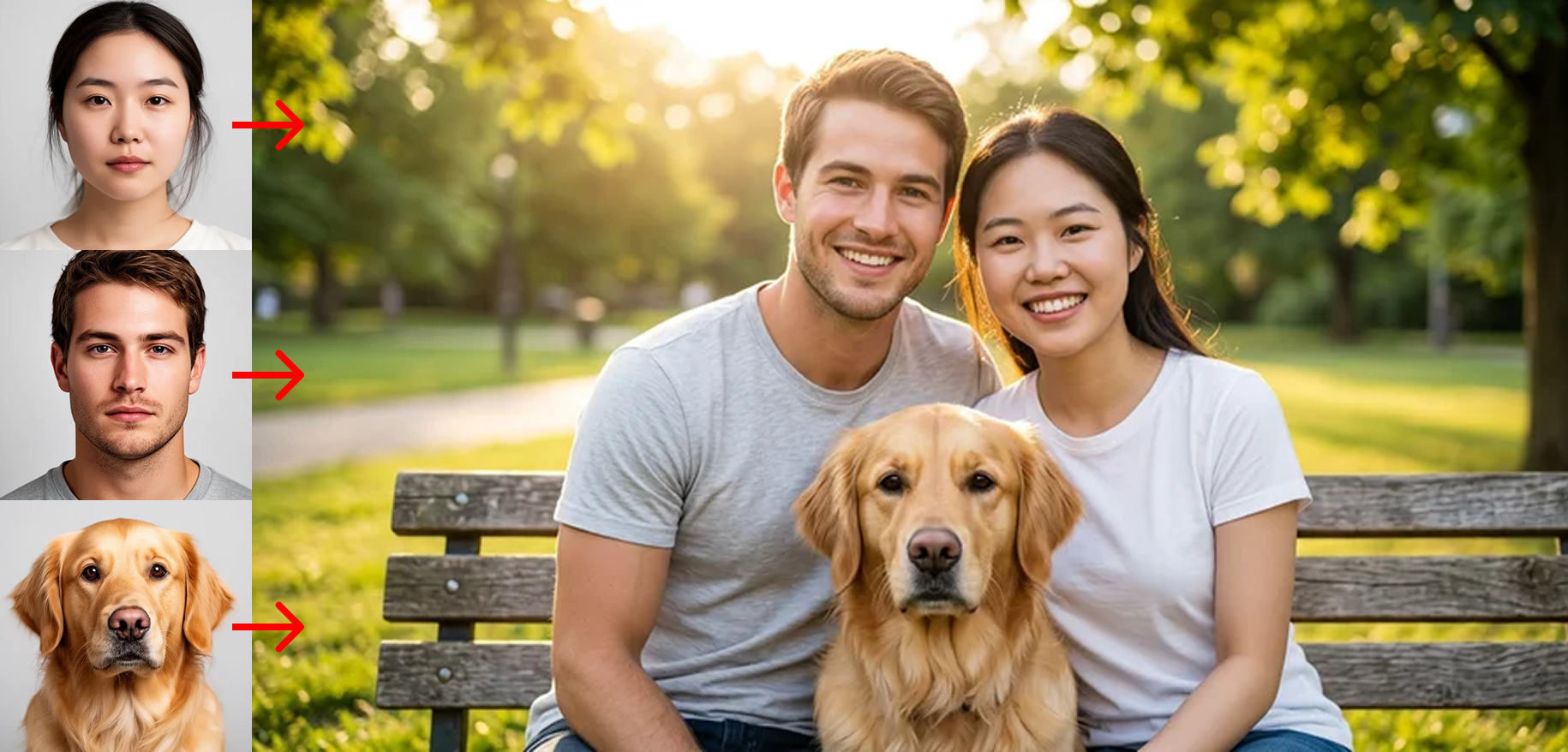
Nano Banana 2
Strong character identity retention — the facial structure, skin tone, hair colour, and key distinguishing features of the reference character are clearly preserved in the new scene. NB2 successfully translated the character seed into a new context without losing recognisable identity.
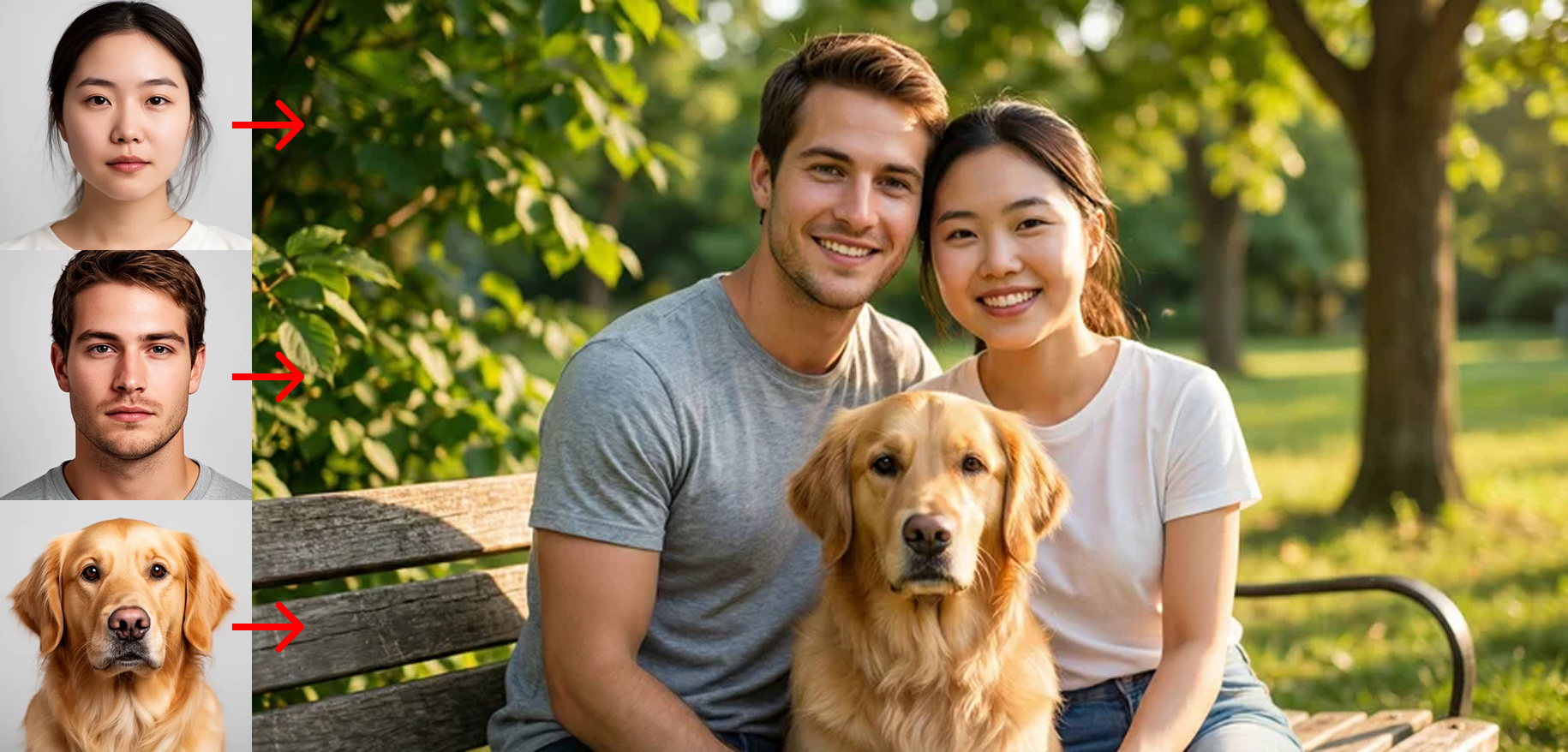
Nano Banana Pro
Excellent character fidelity — the highest-quality output of the four models in this test. Facial detail, skin rendering, and hair texture all align closely with the reference images. Nano Banana Pro produced the most photorealistic and editorially refined character output.
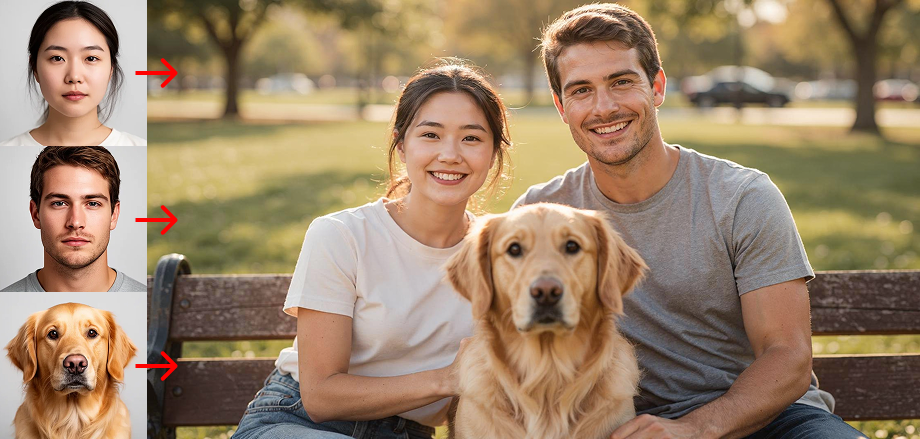
FLUX 2 Pro
Character consistency failed. The generated figure does not match the reference character — facial features, skin tone, and overall identity diverge significantly from the seed images. FLUX 2 Pro treated the character references as loose stylistic direction rather than identity anchors.
FLUX 2 Max
Character consistency failed. Like FLUX 2 Pro, the output does not preserve the reference character's identity. Despite FLUX 2 Max's overall strength in reference-guided tasks (as seen in Tests 6 and 7), character seed images did not translate into consistent facial identity — the output is a different person.
Nano Banana models clearly win this test. Both NB2 and NB Pro successfully preserved character identity from the seed images, while both FLUX 2 Pro and FLUX 2 Max failed to maintain recognisable character features. For creators who need repeatable characters across multiple scenes — in content series, game assets, or branded storytelling — the Nano Banana family is the only reliable option among these four models.
Overall Verdict: Which Model Fits Your Workflow?
After eight tests covering fashion portrait photography, product shots, cinematic scenes, anime illustration, text rendering, image-to-image generation, multi-reference composition, and character reference consistency, each model shows a distinct personality worth understanding before you choose.
Nano Banana 2 is the practical workhorse of the group. It delivers clean, competent output across nearly every test — reliable colour, solid composition, and acceptable detail at a low cost per image. For high-volume content pipelines where speed and budget matter more than peak visual drama, it is the sensible default. Where it falls short is in atmospheric depth and stylistic boldness: its outputs tend to read as polished but safe.
Nano Banana Pro sits noticeably above NB2 in quality, particularly for fashion and portrait work. Its skin rendering and fabric detail are refined, its text accuracy is the strongest in the group, and its overall output feels the most editorially controlled. It also delivered the strongest character consistency performance of all four models in Test 8 — successfully preserving facial identity from reference seed images where both FLUX 2 models failed entirely. It handles 4K resolution well and is the better choice when photographic naturalism, composed restraint, and repeatable character identity are the goal. The trade-off is cost — it is the most expensive of the NB family at 4K — but for hero-image use cases, the uplift is visible.
FLUX 2 Pro is an interesting model to assess. Across several tests, it deviated more from the literal prompt — most notably in the multi-reference test — yet in many of those same cases it produced the most visually compelling result. Its sense of composition, cinematic atmosphere, and dramatic lighting regularly stood out. If you treat it as a creative collaborator rather than a precision tool, it often delivers images that are more striking than what you explicitly asked for. Its lower output resolution ceiling (approximately 4 MP, closer to 3K than 4K) is worth accounting for in high-resolution workflows.
FLUX 2 Max proved to be the most consistently high-quality model across all tests. Product photography, multi-reference composition, I2I sneaker rendering, and cinematic scene-building — it led or matched the best output in nearly every category. Prompt fidelity, material detail, and atmospheric control are all strong. The main consideration is cost: because FLUX 2 models charge separately for reference inputs, I2I and multi-reference workflows accumulate cost quickly. For single-prompt T2I work, FLUX 2 Max is competitive; for heavy reference workflows, budget needs to be planned carefully.
The broader picture that emerges from eight tests is a clear split between text-to-image and image-to-image performance. In pure T2I — fashion portraiture, product photography, cinematic scenes, anime illustration, and text rendering — FLUX 2 models matched or exceeded the Nano Banana models in the majority of cases. FLUX 2 may be quietly underestimated: despite attracting less community attention than Nano Banana since launch, it delivered consistently stronger visual drama and atmospheric quality across creative T2I tasks.
In image-to-image workflows, however, Nano Banana models hold a meaningful advantage on two fronts. First, character reference consistency: as Test 8 demonstrates, both NB2 and NB Pro successfully preserved individual character identity from seed images, while FLUX 2 Pro and FLUX 2 Max failed to maintain recognisable character features. Second, cost efficiency: FLUX 2 models charge separately for each reference image input at approximately $0.03/MP per reference, meaning multi-reference and character-guided workflows accumulate cost quickly. Nano Banana models include reference inputs at almost no extra charge, making them significantly more economical for I2I-heavy pipelines. If your primary use case involves character consistency, multi-reference editing, or branded asset generation, the Nano Banana family is the more capable and cost-efficient choice.
Frequently Asked Questions
Is Nano Banana 2 better than FLUX 2 Pro?
Neither model is universally better — they excel in different areas. Nano Banana 2 led on text rendering accuracy and is more cost-predictable for high-volume generation. FLUX 2 Pro produced more atmospheric, dramatically lit scenes in portrait, cinematic, and multi-reference tests. Choose NB2 for budget-efficient pipelines; choose FLUX 2 Pro when visual drama matters more than per-image cost.
Which model is best for anime-style images?
Based on Test 4 (WLOP/Guweiz illustration brief), FLUX 2 Max produced the most stylistically committed anime output — a cohesive cool monochromatic palette, precise atmospheric lighting, and semi-realistic rendering. The FLUX 2 family is the stronger choice for anime and digital illustration content.
Can Nano Banana 2 use reference images?
Yes — Nano Banana 2 supports image-to-image generation with up to 14 reference images in total (up to 10 object references and up to 4 character references). It also uses Web Search Grounding, which allows it to pull real-world visual references from Google Search during generation — adding a layer of accuracy for real-world subjects that other models cannot match.
What is FLUX 2 Max best at?
FLUX 2 Max demonstrated clear strengths in cinematic scene-building, fashion portrait photography, anime illustration, and multi-reference fashion composition — leading or matching the best output in six of the seven tests in this comparison.
Which model handles text in images best?
Nano Banana Pro produced the cleanest and most legible text in Test 5 (cappuccino lettering prompt). FLUX 2 models struggled with flowing handwritten text in physical contexts. For any workflow requiring accurate text in images, the Nano Banana family is the more reliable choice.
Is FLUX 2 Max worth the extra cost over FLUX 2 Pro?
For most creative use cases, yes. FLUX 2 Max consistently outperformed Pro on reference fidelity, compositional balance, and cinematic atmosphere. The premium is justified for fashion photography, high-concept illustration, and multi-reference campaigns. For simpler product shots, FLUX 2 Pro produces comparable results at a lower cost per image.