Nano Banana vs. Nano Banana 2 vs. Nano Banana Pro: Which Google AI Image Model Should You Use?
By None None
Published: April 12, 2026
7 min read
Tags: Nano Banana, AI image generation, Google Gemini, image model comparison
Category: AI Tools & Models
Google’s Nano Banana family has quietly become one of the most capable and versatile AI image generation lineups available via API. With three distinct tiers — Nano Banana, Nano Banana Pro, and Nano Banana 2 — each built on a different generation of Gemini architecture, choosing the right model means understanding where they differ in quality, speed, creative style, and cost. This guide puts all three head-to-head so you can pick the right one for your workflow.
Understanding Google’s Nano Banana Image Model Family
All three Nano Banana models are built on Google DeepMind’s Gemini multimodal architecture, available via Google Vertex AI and AI Studio. They share a common foundation: support for a wide range of aspect ratios (from 1:1 to 21:9), automatic SynthID watermarking, and both text-to-image (T2I) and image-to-image (I2I) generation. But beyond that shared core, each model was designed with a different priority in mind.
Nano Banana (Gemini 2.5 Flash Image) – August 2025: The Viral Origin
The original Nano Banana launched in August 2025 on Gemini 2.5 Flash and quickly went viral for its distinctive “3D figurine” aesthetic — crisp, stylised, and consistently photorealistic. It’s the most affordable entry in the family and delivers solid baseline quality for a wide range of subjects. Its T2I output tends to favour clean, neutral compositions with accurate lighting. For image-to-image, it supports multiple reference images, enabling flexible multi-reference editing and style transfer.
Nano Banana Pro (Gemini 3 Pro Image) – November 2025: Maximum Quality
Nano Banana Pro arrived in November 2025 powered by Gemini 3 Pro, and it sets the quality ceiling for the family. Its primary strengths are richness of texture, depth of spatial composition, and the most accurate typography and text overlay of any Nano Banana model. It outputs at up to 4K resolution and handles multi-language typography with notable precision — making it especially useful for e-commerce assets, brand visuals, and final-production renders. For I2I generation, it supports up to 14 reference images in total, comprising up to 6 object references and up to 5 character references — the highest character consistency capacity in the Nano Banana family.
Nano Banana 2 (Gemini 3.1 Flash Image) – February 2026: Speed Meets Web Intelligence
Nano Banana 2 is the newest and most feature-rich member of the family, released in February 2026 on Gemini 3.1 Flash. It runs approximately 2–3x faster than Nano Banana Pro and delivers around 95% of Pro’s image quality, making it a cost-effective option for most production workflows. For I2I generation, it supports up to 14 reference images in total — structured as up to 10 object references and up to 4 character references — making it well-suited for multi-character scene generation and product composition workflows. It outputs across a flexible resolution range from 0.5K up to 4K.
Web Search Grounding in Nano Banana 2 – What It Actually Does
One of Nano Banana 2’s most distinctive features is Web Search Grounding — the ability to fetch real-world visual references at generation time. When enabled, the model queries the web for images matching key elements of your prompt before beginning generation. This means prompts referencing specific brands, products, real locations, or current events can produce outputs informed by actual visual data rather than just training knowledge. For marketing teams creating content about real products or for journalists producing AI-generated reference images, this feature can substantially narrow the gap between generated and reference-accurate imagery.
Text-to-Image: How Each Model Generates from a Prompt
To test the models under identical conditions, we used the same prompt across all three in a single run on AI Compare Hub: a luxury perfume bottle product shot on marble, rendered in 16:9 format. The results showed meaningful stylistic and quality differences that matter for real-world decisions.
Texture, Lighting, and Composition Quality Across Models
Looking at the three outputs side by side, a clear progression emerges from Nano Banana through to Nano Banana Pro.
Nano Banana produces clean, reliable catalogue-quality outputs with soft lighting and neutral compositions — ideal for high-volume generation where predictability matters more than creative ambition. Nano Banana 2 steps up with editorial depth, richer environmental storytelling, and accurate brand typography, while Nano Banana Pro delivers the most cinematically luxurious results, with exceptional surface detail, dramatic lighting, and a level of texture fidelity that approaches professional retouching quality.
Nano Banana Text-to-Image
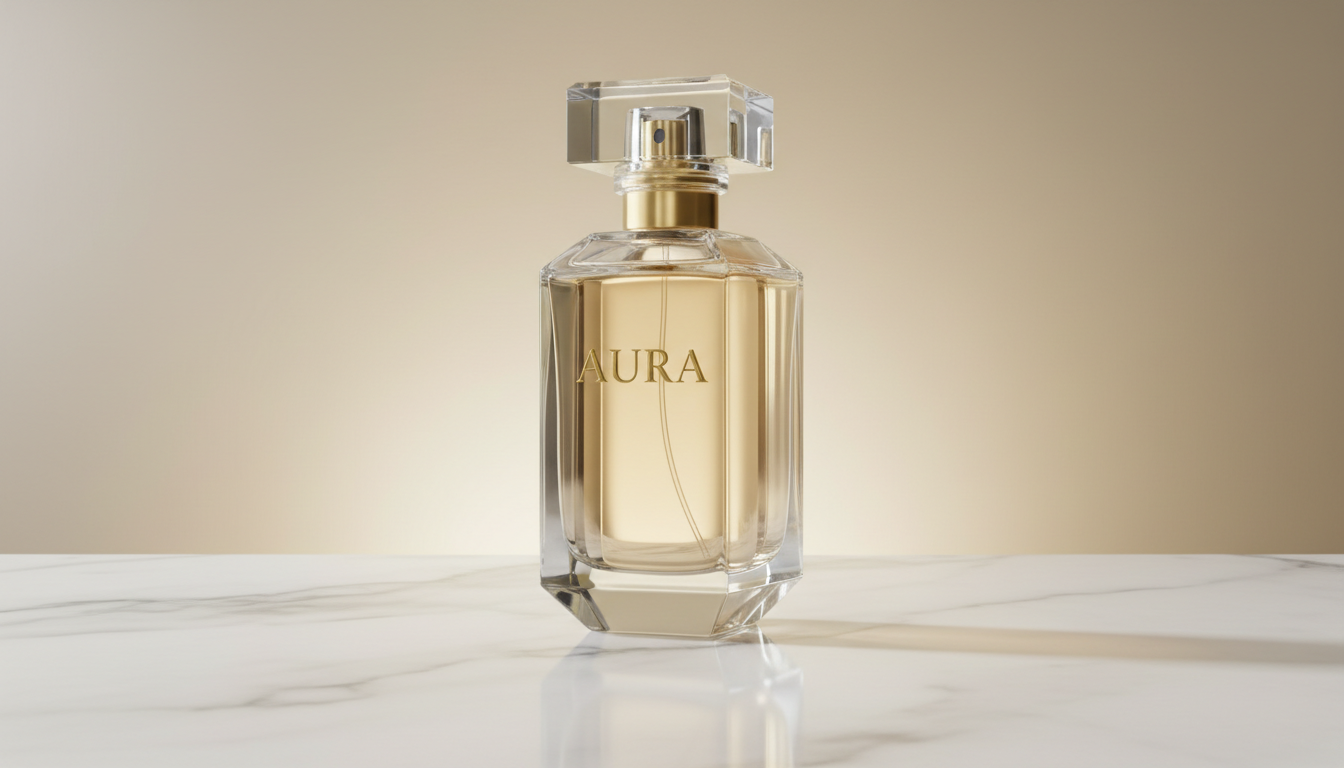
Nano Banana (Gemini 2.5 Flash): Clean, minimalist perfume bottle on a neutral cream marble surface — accurate and photorealistic, but deliberately understated.
Nano Banana produced a tall, elegantly cylindrical perfume bottle against a neutral cream gradient background. The composition is clean and balanced, with soft natural lighting and a smooth marble surface below. The glass and liquid are rendered accurately, though the scene lacks strong environmental depth or dramatic lighting contrast. This is a reliable baseline output — exactly what you’d expect for catalogue-style product photography.
Nano Banana 2 Text-to-Image
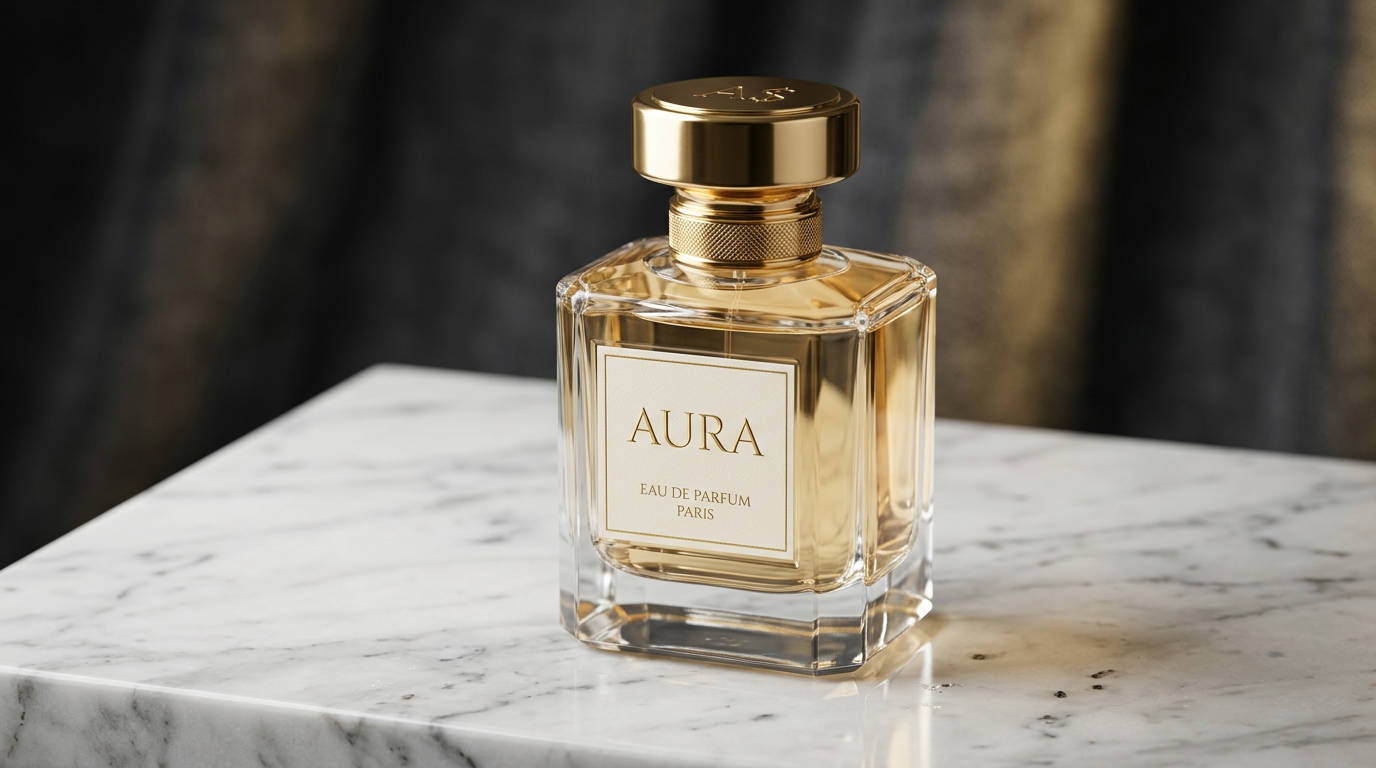
Nano Banana 2 (Gemini 3.1 Flash): More editorial composition with a defined brand label, gold knurled cap, and a dramatic dark-fabric background — closer to a luxury campaign shot.
Nano Banana 2 made significantly more creative decisions. The bottle became squarer and more classically shaped, featuring a prominent knurled gold cap and a proper product label reading “AURA / EAU DE PARFUM / PARIS.” The background shifted to a dark, textured fabric, adding considerable depth and atmosphere. The marble surface is more detailed, and the overall scene feels like a premium brand editorial — a notable step up in compositional ambition.
Nano Banana Pro Text-to-Image
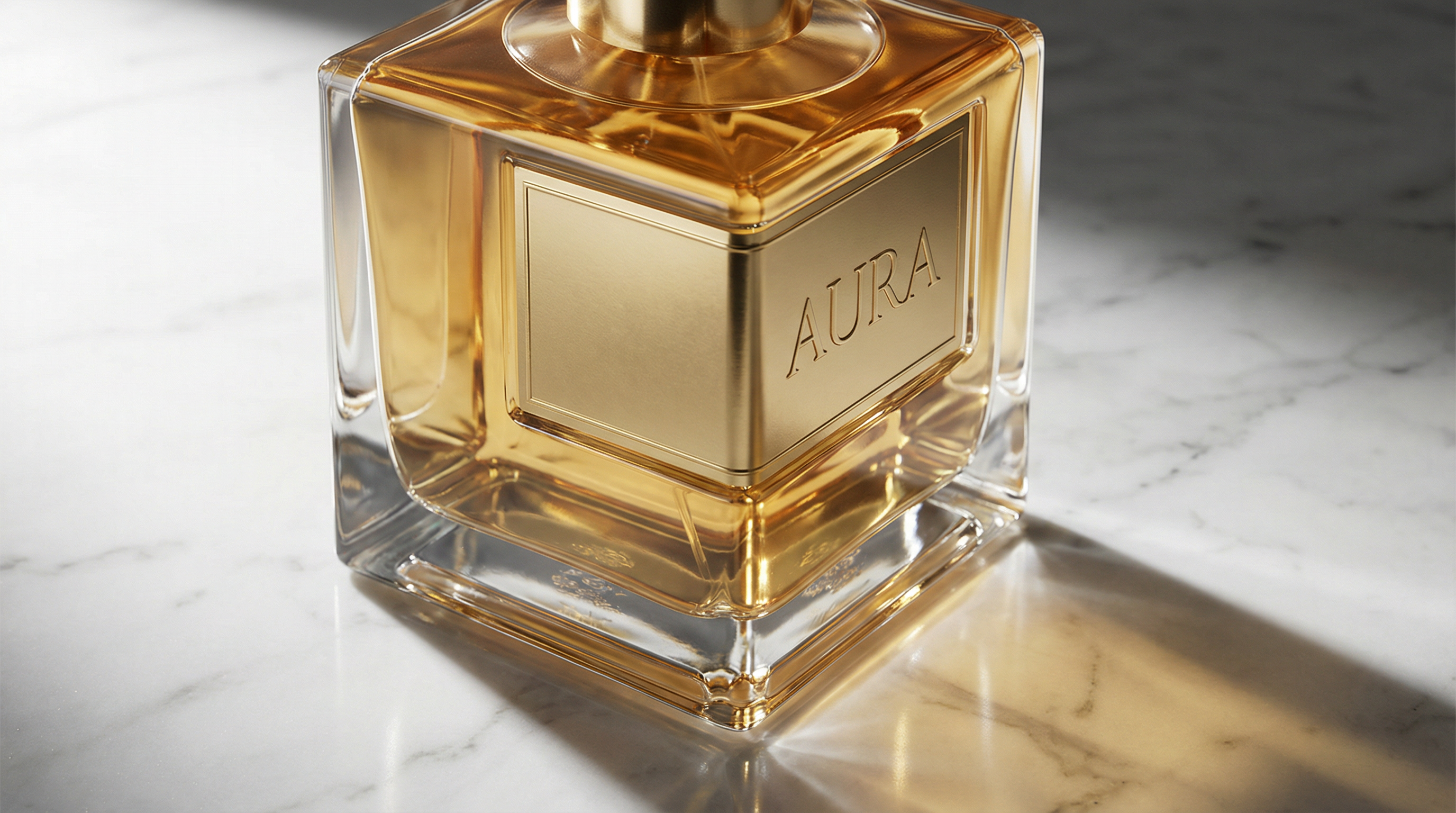
Nano Banana Pro (Gemini 3 Pro): Cinematic low-angle close-up with exceptional gold metallic textures, sharp directional shadows, and striking marble reflections — the most luxurious output of the three.
Nano Banana Pro took the most dramatic approach. It chose a low-angle close-up framing that fills the frame with the bottle’s gold metallic face panel. The directional studio lighting casts sharp, precise shadows across the white marble, and the surface reflections are exceptional — the kind of image quality typically associated with professional retouching workflows. The gold engraving and surface texture are rendered at a detail level that surpasses both other models. If the image is cropped at the top, that’s a deliberate stylistic choice by Pro rather than a flaw.
Typography and Text Rendering in Generated Images
All three models rendered the “AURA” label legibly, but with notable differences. Nano Banana kept the branding small and subtle. Nano Banana 2 introduced a full label with brand hierarchy (“EAU DE PARFUM / PARIS”) that would not look out of place on an actual product. Nano Banana Pro rendered the brand name as a large engraved inscription on a metallic surface — the most visually impactful, though it sacrifices the informational label for pure aesthetic drama. For projects requiring accurate typographic labels, Nano Banana 2 or Pro are the clear choices over the original.
Image-to-Image: Editing, Enhancement, and Multi-Reference Workflows
For the image-to-image comparison, we used the Nano Banana T2I output (the original perfume bottle on marble) as the consistent input image across all three models, with the same enhancement prompt: increasing photorealism, adding bokeh, enriching gold metallic textures, and intensifying studio lighting. Each model responded in a noticeably different way.
Nano Banana Image-to-Image
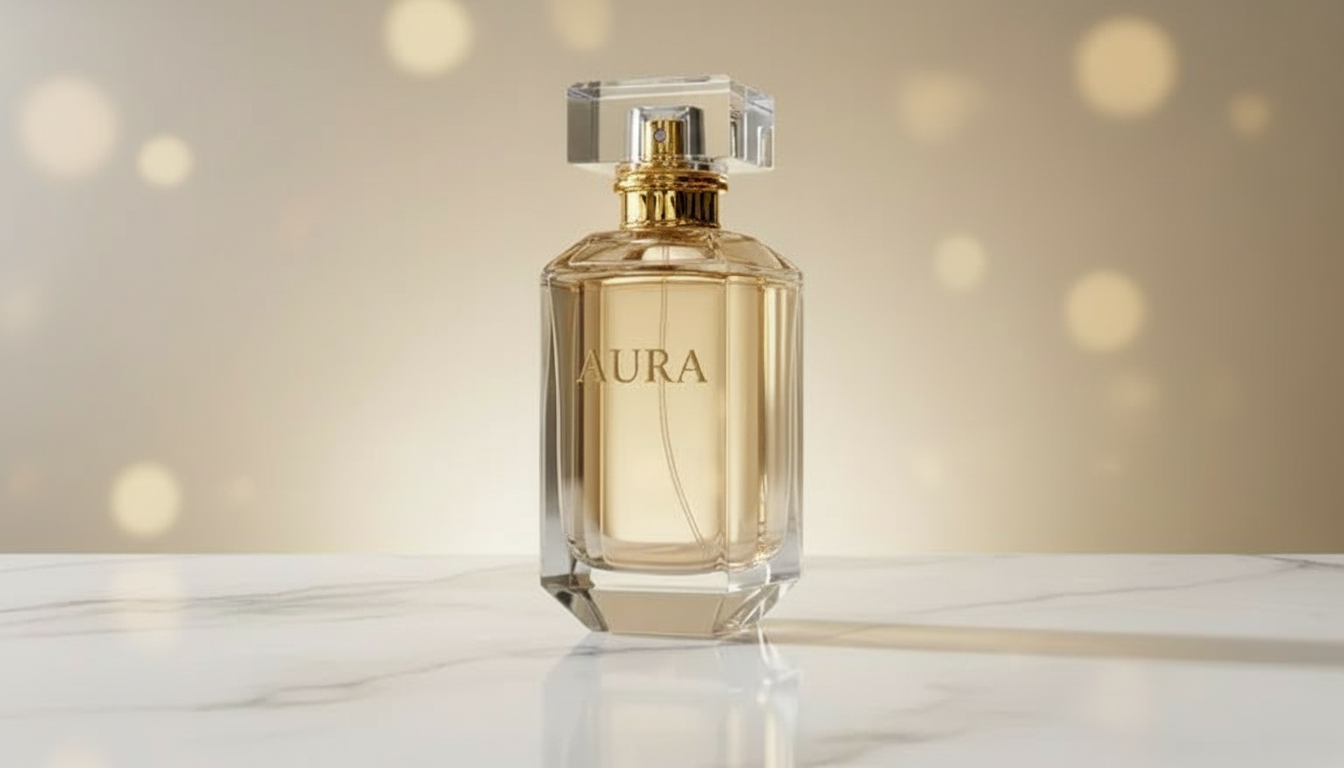
Nano Banana I2I: A faithful, conservative enhancement — the original composition is preserved with soft warm bokeh circles added to the background for subtle atmosphere.
Nano Banana’s image-to-image result was the most conservative of the three. The bottle shape, position, and composition are virtually identical to the input image. The model added soft, round bokeh circles in a warm cream tone to the background, giving the image a gentle editorial polish, and refined the gold accent at the bottle neck. It’s a polished, safe transformation — ideal when you need subtle improvement without creative deviation from the original.
Nano Banana 2 Image-to-Image
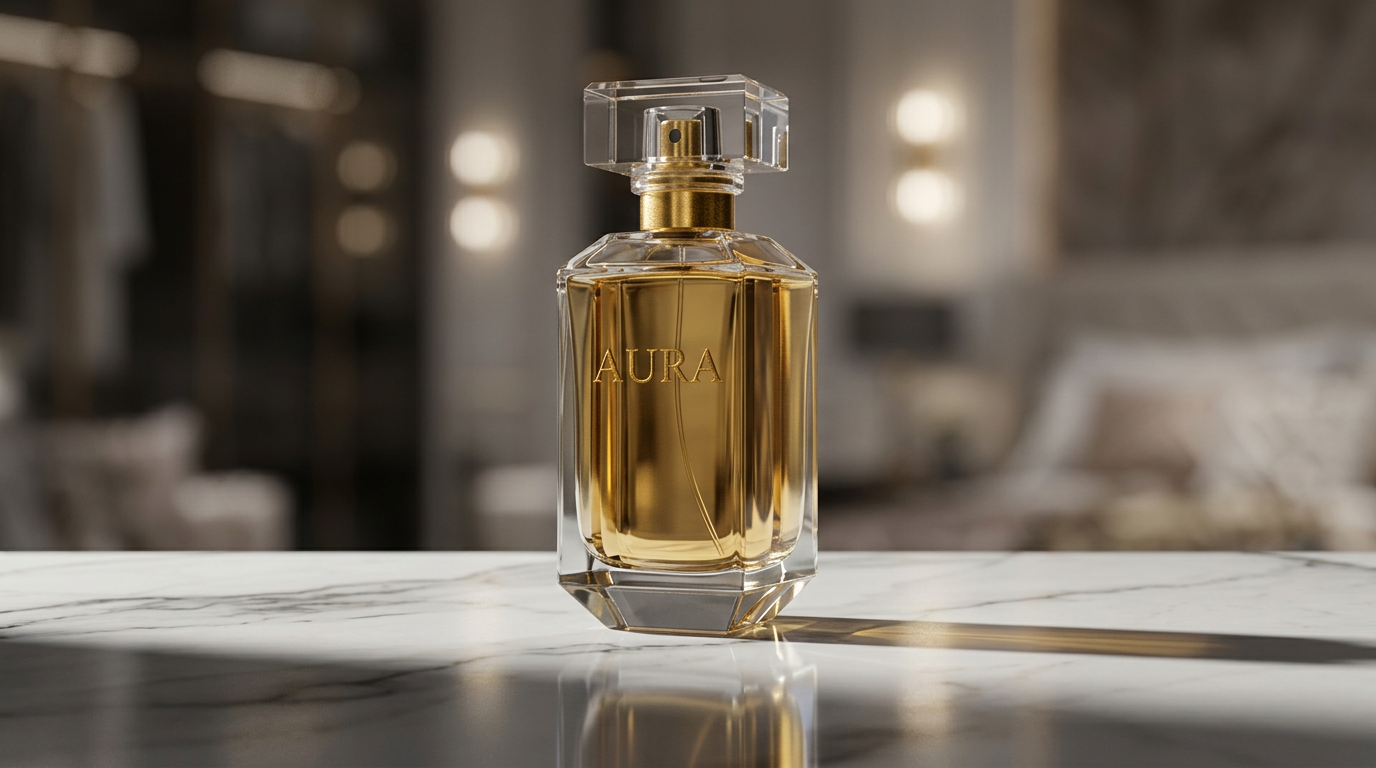
Nano Banana 2 I2I: A dramatic reinterpretation — the background transforms into a dark luxury interior with environmental depth, and the bottle takes on a richer golden-amber glass tone.
Nano Banana 2 made far more aggressive creative decisions. The background transformed from a neutral gradient into a dark, moody luxury interior — reminiscent of a high-end boutique or hotel corridor with spot lighting. The bottle glass takes on a richer amber-gold tone, and the scene has significantly more environmental depth and storytelling. This is a lifestyle campaign interpretation of the input, not simply a quality enhancement. Nano Banana 2 is clearly more willing to reinterpret a composition when given an open-ended prompt.
Nano Banana Pro Image-to-Image
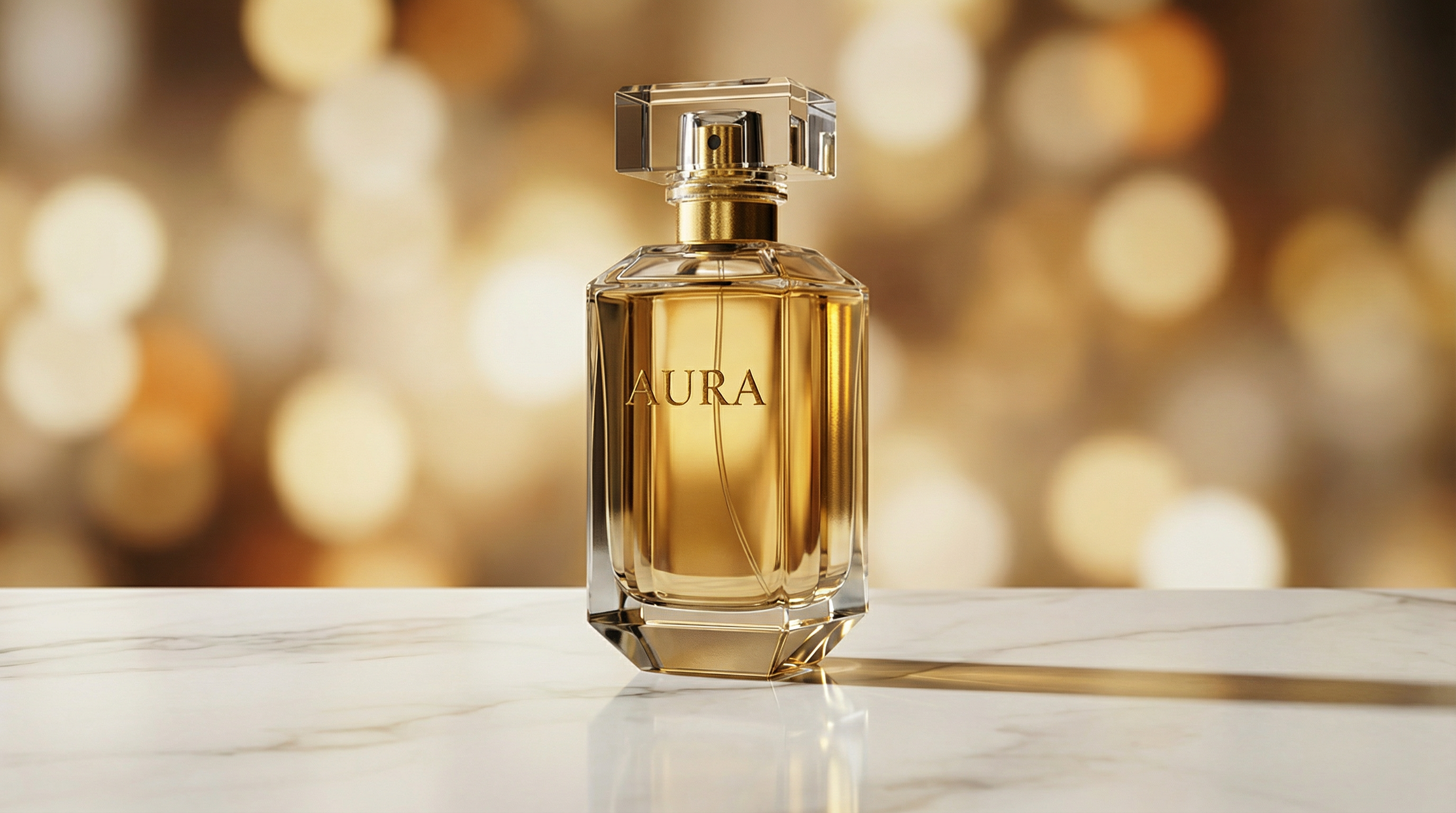
Nano Banana Pro I2I: The most glamorous transformation — large warm golden bokeh fills the frame with an ethereal luxury atmosphere, while the marble reflection glows with warmth.
Nano Banana Pro produced the most visually spectacular result. The background filled with large, warm golden bokeh spheres that create an almost ethereal, cinematic atmosphere — the kind of background seen in high-budget fragrance advertising. The bottle retains the original cylindrical shape but takes on a rich amber luminosity. The marble surface carries a deep warm reflection that mirrors the bokeh light. This is luxury magazine advertising aesthetics, generated from a single image-to-image pass. If your goal is the most visually arresting, production-ready output, Nano Banana Pro’s I2I is the clear choice.
Character Reference Consistency Test
Before reviewing the results, it’s worth understanding what each model is designed to handle. According to Google’s official documentation, Gemini 3 image models support up to 14 reference images in total for I2I generation. Within that pool, Nano Banana Pro (Gemini 3 Pro) allocates up to 6 slots for object references and up to 5 character references — the highest character consistency capacity in the family. Nano Banana 2 (Gemini 3.1 Flash) allocates up to 10 slots for object references and up to 4 character references. The base Nano Banana model doesn’t have documented per-category limits. The test below uses three character seed images (woman, man, dog) — well within the documented capacity of both Gemini 3 models — to isolate how faithfully each model preserves identity under identical conditions.
One of the most practical tests for any image model is how well it preserves character identity when you feed it reference images. To evaluate this, we used three seed headshot images — an East Asian woman in her 20s (Image 1), a Western man in his 20s (Image 2), and a golden retriever dog (Image 3) — each on a light gray background in 16:9 format. These seeds were then used as multi-image references in an image-to-image prompt to generate the same outdoor scene across Nano Banana, Nano Banana Pro, and Nano Banana 2.
Seed Images
The three seed characters used as references — each given a numbered label matching the I2I prompt references.

Image 1: East Asian woman in her 20s (seed reference)

Image 2: Western man in his 20s (seed reference)
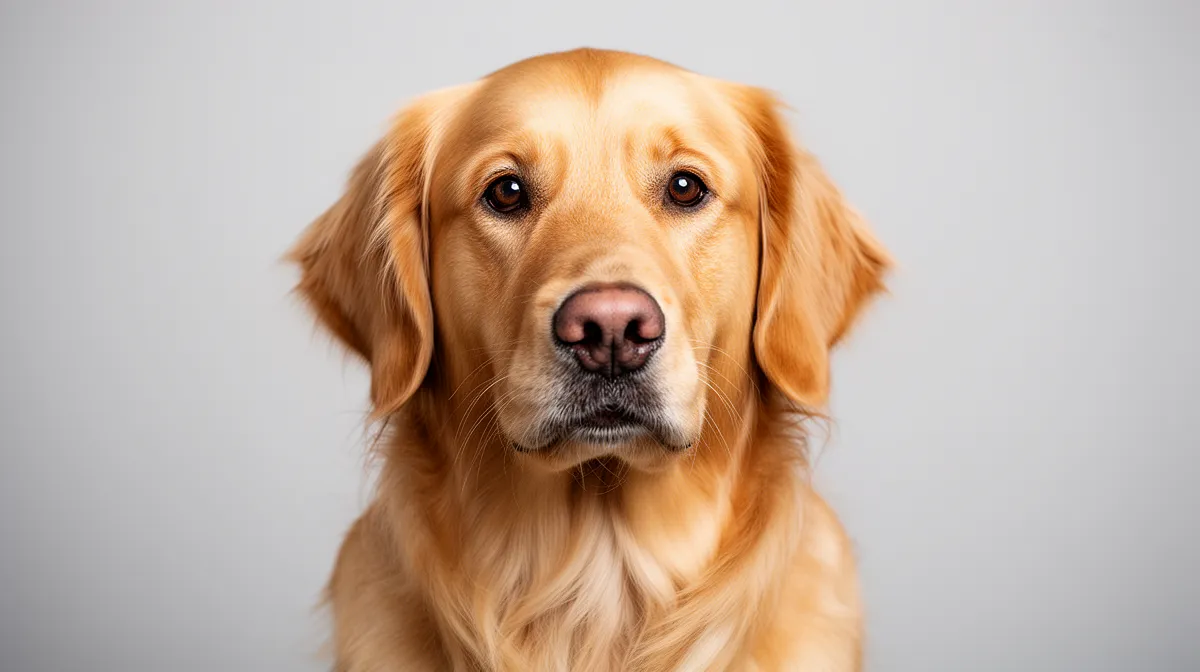
Image 3: Golden retriever dog (seed reference)
Scene Generation Results
The same prompt and the same three seed images were submitted to each model. The outputs below reveal meaningful differences in how each model interprets and preserves character identity.
Scene Prompt: “A sunny outdoor park scene. The woman from image 1 and the man from image 2 are sitting together on a wooden park bench, smiling warmly. The golden retriever dog from image 3 sits on the grass in front of them, facing the camera. Soft afternoon sunlight, lush green park background, photorealistic, cinematic quality, 16:9”
How Each Model Handled Character Consistency
Nano Banana followed the scene composition well — placing two figures on the bench and a dog in the foreground — but character fidelity was loose. The woman and man bore only a general resemblance to the seed images, with facial features drifted noticeably from the references. The dog captured the golden retriever breed correctly but lacked the individual character of the seed. Overall, the layout was respected, but identity transfer was inconsistent.
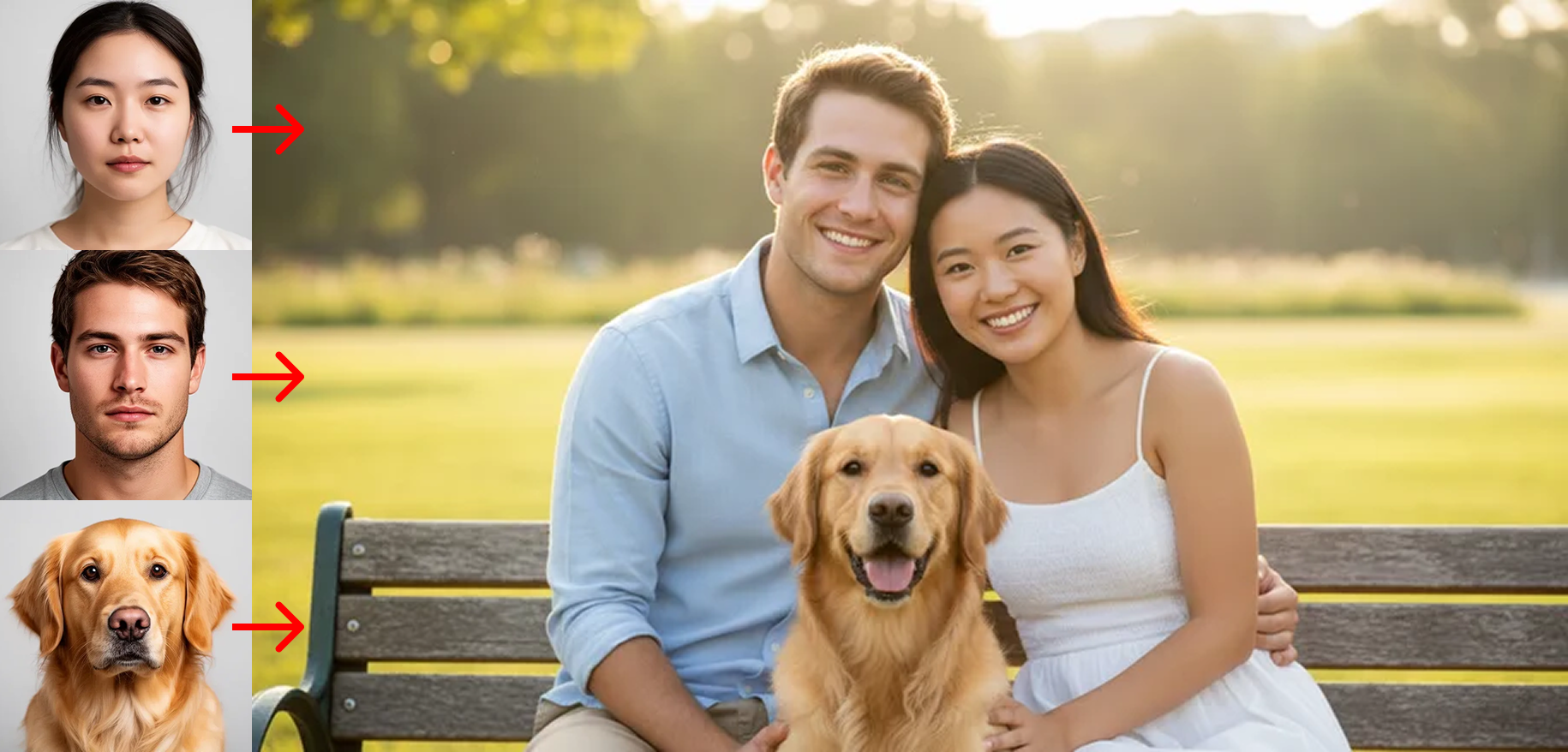
Nano Banana — scene with character references
Nano Banana Pro showed a meaningful step up in character consistency. Facial structures were closer to the seed references, particularly for the woman, and the overall scene composition was more cinematic. The higher native resolution helped preserve fine detail — hair texture, skin tone, and facial proportions tracked the seeds more faithfully. The dog also felt more individuated. It’s clearly the better choice when character accuracy matters.
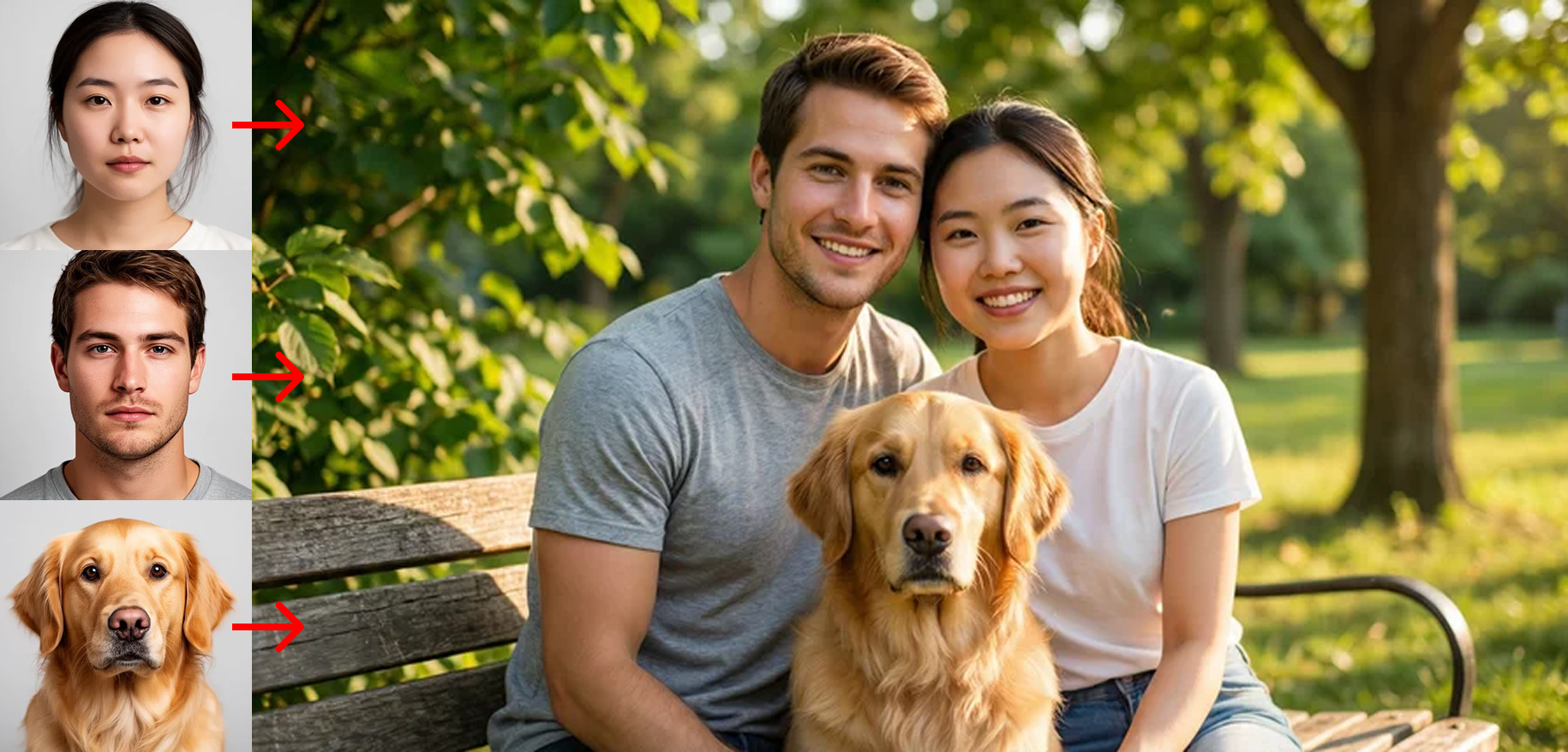
Nano Banana Pro — scene with character references
Nano Banana 2 landed between the two. Character placement followed the prompt accurately, and identity retention improved over the base model — the man’s features in particular were recognisable from the seed — but it did not consistently match Nano Banana Pro’s precision across all three characters simultaneously. Where Nano Banana 2 stands out is in the naturalness of the scene: lighting, pose, and environmental integration felt more believable than either sibling model, suggesting it optimises for photorealism over strict reference adherence.
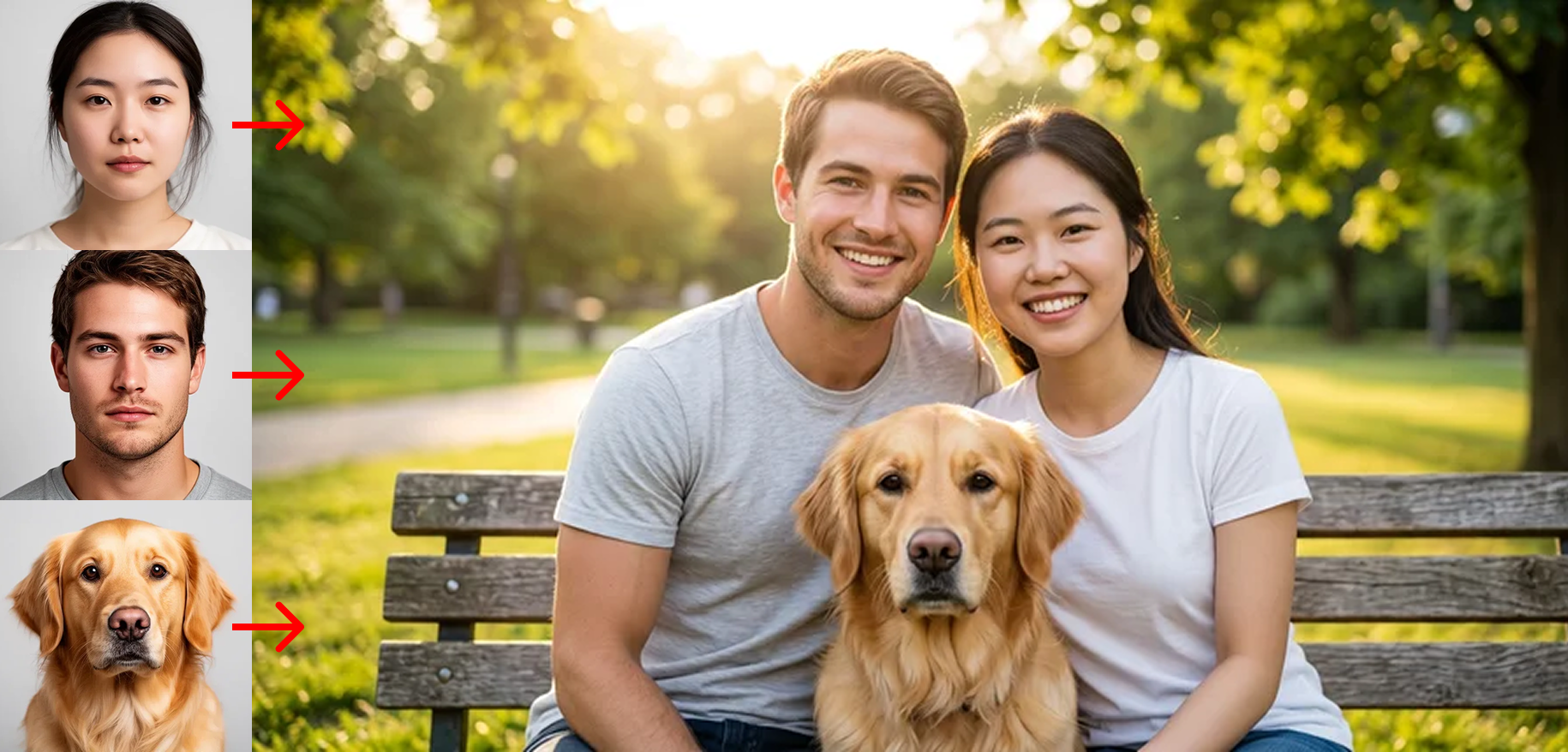
Nano Banana 2 — scene with character references
For workflows where character consistency is critical — like storyboards, branded characters, or multi-scene narratives — Nano Banana Pro is the clear choice. For single photorealistic scenes where natural quality takes priority over exact identity matching, Nano Banana 2 is a strong alternative.
API Pricing and Resolution Options
All three Nano Banana models are available via Google Vertex AI and Google AI Studio. Pricing is based on a simple two-step calculation: each model has a fixed token rate (per 1 million tokens generated), and each image consumes a certain number of tokens depending on the resolution you choose. Multiply the two together and you get the per-image cost on your bill. Understanding this logic makes it easy to predict costs and design workflows that balance quality against budget.
Cost Per Image: Token Rate × Token Count (via Google Vertex AI)
| Model | Base Model | Standard Price | Higher Res Price | Best Use |
|---|---|---|---|---|
| Nano Banana | Gemini 2.5 Flash | $0.034/img (1K) | — | Bulk generation, rapid prototyping |
| Nano Banana 2 | Gemini 3.1 Flash | $0.067/img (1K) | $0.101 (2K) / $0.15 (4K) | Speed + web grounding, multi-ref editing |
| Nano Banana Pro | Gemini 3 Pro | $0.134/img (1K/2K) | $0.240/img (4K) | Final quality renders, text overlays |
Nano Banana has the lowest token rate in the family — $30 per million tokens. A 1K image consumes approximately 1,120 tokens, giving a final cost of $0.034 per image. No other resolutions are available for this model tier, which keeps it the most cost-effective option for high-volume generation.
Nano Banana 2 runs at a token rate of $60 per million tokens — double Nano Banana’s. Its token consumption scales directly with resolution: approximately 1,120 tokens at 1K ($0.067), 1,680 tokens at 2K ($0.101), and 2,500 tokens at 4K ($0.150). The more detail you request, the more tokens are consumed, and the price scales accordingly across its full resolution range from 0.5K to 4K.
Nano Banana Pro runs at the highest token rate: $120 per million tokens. One thing worth noting is that both its 1K and 2K outputs consume the same number of tokens — approximately 1,120 — which is why both resolutions share the same price of $0.134. Only at 4K does the token count increase, pushing the price to $0.240. These per-image costs are calculated from the official Vertex AI Generative AI pricing page, which publishes token rates per 1 million tokens.
Which Nano Banana Model Should You Use?
The right choice really comes down to your use case and where you are in the production pipeline.
Choose Nano Banana (original) if you need the lowest possible cost per image, are generating at very high volume, or want a clean, reliable baseline for content that does not require high aesthetic scrutiny. The outputs are accurate and photorealistic, but deliberately understated.
Go with Nano Banana Pro when image quality is your primary concern — for final-production hero images, print-ready brand assets, or any context where the image will be viewed closely and judged harshly. Its texture rendering, lighting precision, and typography accuracy are unmatched in the family. Use it as the final stage in a hybrid workflow to get the best cost-quality balance.
For virtually everything else, Nano Banana 2 is your best bet. It delivers ~95% of Pro’s quality at roughly half the cost per image, runs 2–3x faster, and adds uniquely valuable capabilities: Web Search Grounding for reference-accurate generation, and structured I2I referencing with up to 10 object slots and up to 4 character slots across a scene. For most professional image workflows in 2026, Nano Banana 2 is the natural default — and when character consistency matters but you don’t need Pro’s full five-character capacity, its four-character limit covers the majority of scene generation tasks.
Workflow Strategy – Combining Models for Cost-Quality Balance
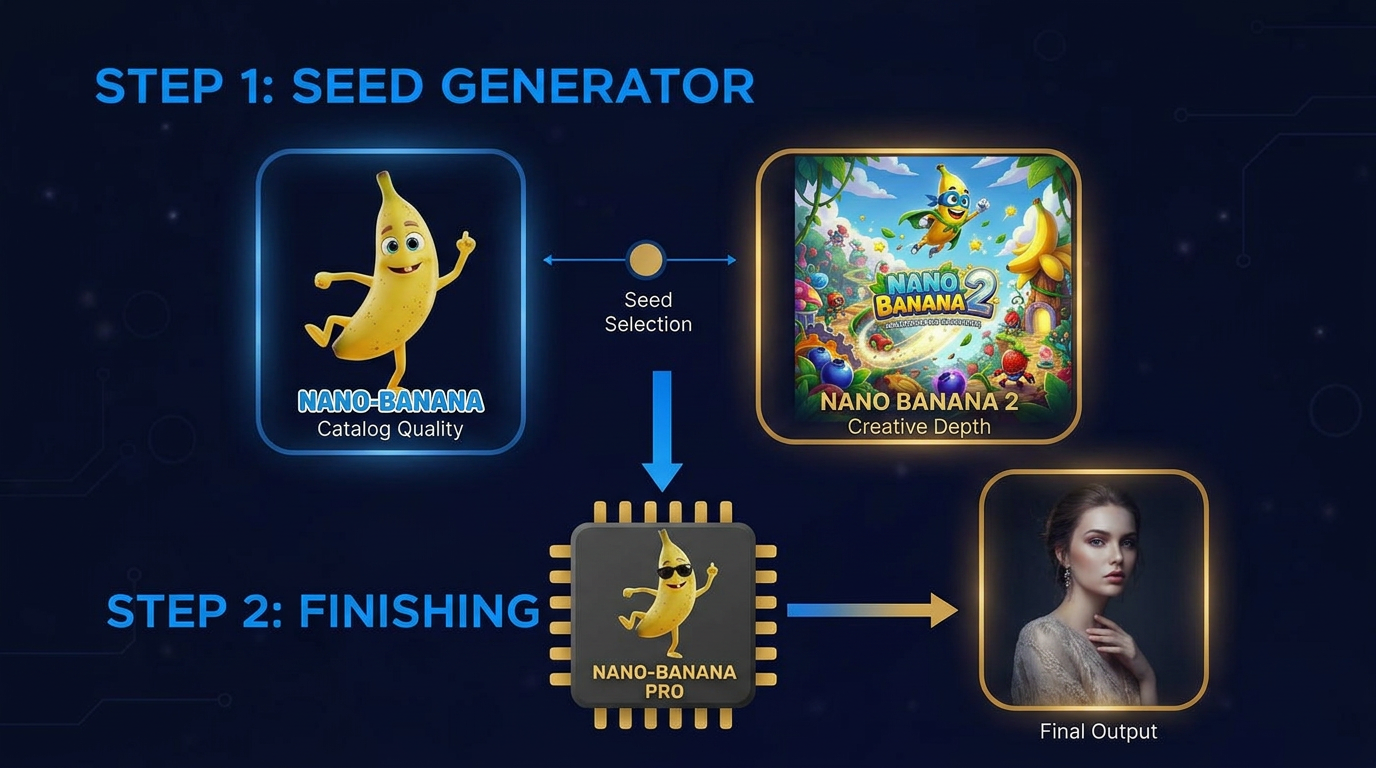
Choose Your Seed Generator: Nano Banana or Nano Banana 2
The most effective production workflow for quality-conscious teams is a two-stage pipeline: generate multiple candidate seed images, select the strongest, then pass it through Nano Banana Pro’s image-to-image for a final quality pass. The key decision is which model to use for seed generation — and this depends on the complexity of the image you need.
Use Nano Banana (original) as your seed generator for simpler, more predictable compositions: clean product shots, neutral-background subjects, or any image where a reliable, catalogue-quality baseline is the goal. As the most cost-effective seed option, generating multiple candidates before a Pro I2I pass keeps the total hybrid workflow well below an all-Pro approach.
Use Nano Banana 2 as your seed generator when the image requires more creative depth, editorial ambition, or structured multi-reference composition. Its Web Search Grounding capability, broader resolution range, and support for up to 10 object and 4 character references make it significantly more capable for complex scenes. It costs more per candidate than Nano Banana (original), but frequently produces seeds that need less correction in the Pro I2I pass — offsetting the higher upfront cost in overall pipeline efficiency.
When to Stay with One Model vs. Chain Two Together
For rapid prototyping, social media content, or high-volume generation where budget is the primary constraint, use a single model: Nano Banana for the lowest cost, or Nano Banana 2 when editorial quality and multi-reference support matter. Reserve the two-stage hybrid — seed generation plus Nano Banana Pro I2I — for assets where image quality will be scrutinised closely: hero product images, print-ready advertising, brand campaign visuals, or any content that represents your business at its absolute best.
All images in this article were generated using AI Compare Hub’s multi-model generation platform. Prices are based on Google Vertex AI official rates as of April 2026.